
Press Mute: When Corruption Becomes Performance Art
Press Mute, written and directed by Times of Malta editor-in-chief Herman Grech, is a shocking mirror of real life. Staged in a simple manner at Teatru Salesjan, the characters shifted across the newsroom (a long table in the centre and two chairs), and a podcast studio (a high table at the front of the stage).
The play began with Emma (played by Michela Farrugia), a journalist, and Mark (played by Mark Laurence Zammit), the editor, asking the audience to choose between four news items. The choices were a sports story, an environmental story, a story which covers a Nazi march in Valletta, and a story about a scandal involving the Planning Authority. There are a handful of people who voted for the environmental story, but the majority voted for the PA story making it clear what this particular audience felt most aggrieved by, and how closely intertwined the fictional setting of the play and the current reality in Malta, are.
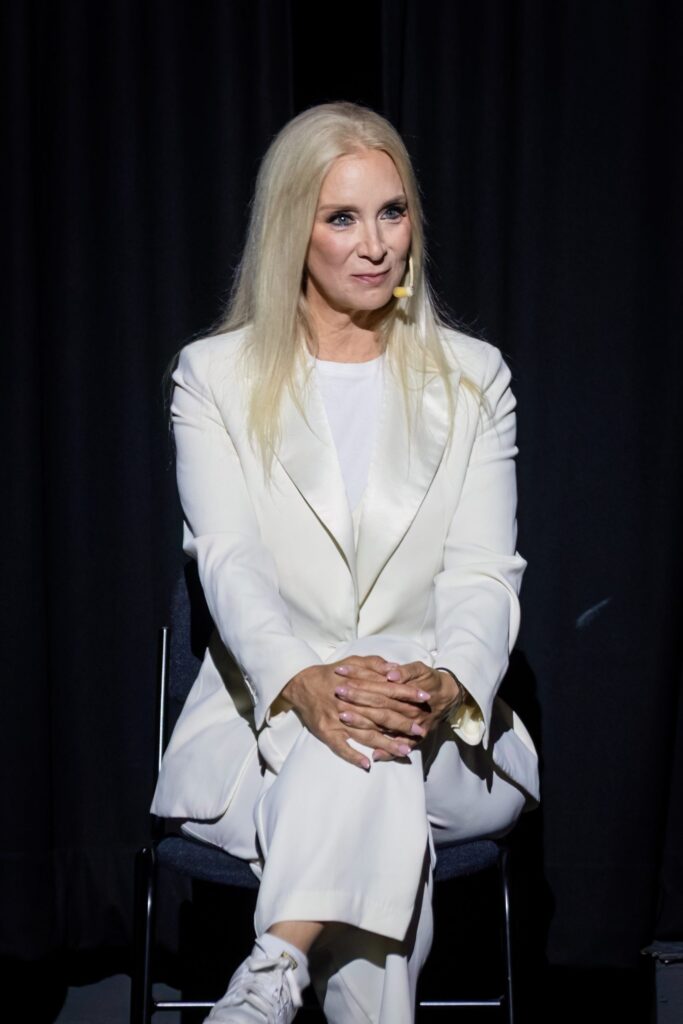
The main theme of this play becomes evident soon enough, as Perry, a podcaster (played by Alan Paris) enters the scene. The tension between professional journalists bound by ethics and driven by the truth, versus the “influencer journalists” driven by the algorithm (which voiced by Trudy Kerr in this play) and ad revenue, who have broader reach in the media landscape, the latter of which “accidentally shape public discourse”, as Emma points out. The narrative makes clear that this schism is exactly where ethics and journalistic rigour is pushed aside in favour of performativity.
Perry boasts about having “adapted” journalism to modern day, by removing barriers between the media and the reader, while giving a platform to the “unheard” whom he lets speak in a raw, unfiltered manner. Just like the real-life ‘Perrys’ of the world, he platforms some of the world’s most problematic individuals, not ever challenging them, which Emma disavows, stating that such acts allow corruption to become “a performance art”.
We see this act of “performance art” in action, when Minister Frank (played by Philip Leone Ganado), the minister for “concrete and corruption” is invited on Perry’s podcast. Championed by Perry and protected by the Establishment, the Minister retains his seat of power even after his true corrupt motives are exposed by Emma. I found this to be a disturbing reminder of the age we are living in: an age where corrupt government officials are allowed to act with impunity even after thievery, manipulation, and the destruction of our country is exposed, an age reflective of the consequence of such an exposé being borne by a journalist, who may end up murdered, and an age that allows those who acted in or allowed such a crime to take place, to walk free.
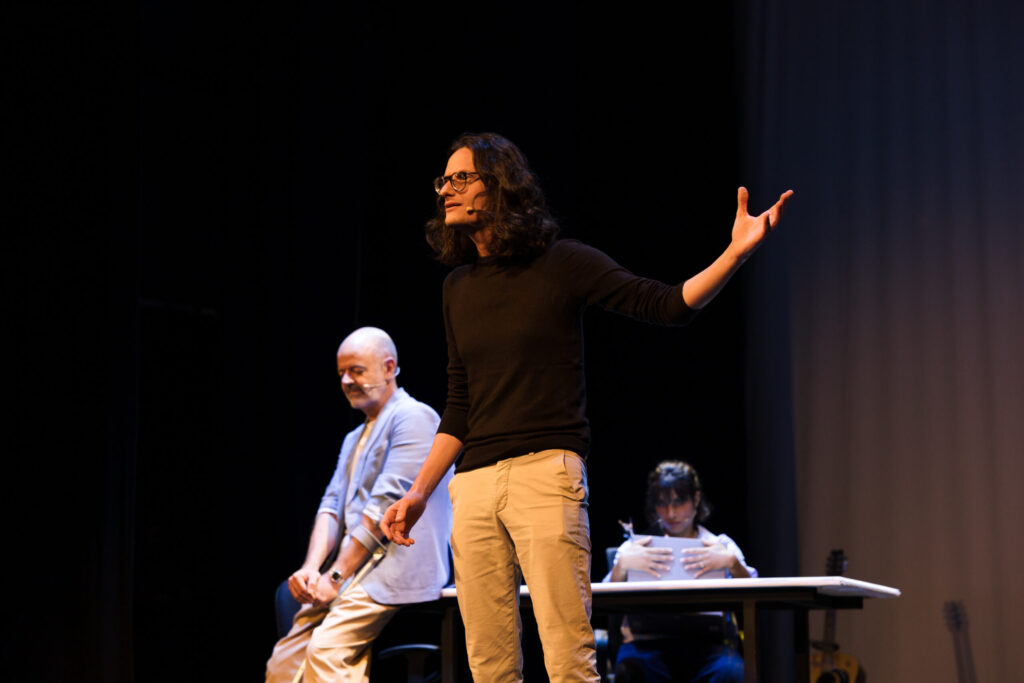
I found that the acting overall was remarkable, giving a well-rounded performance. Farrugia’s strong and energetic stage presence captures the audience’s attention beautifully, and plays nicely against Zammit’s quieter demeanour. They manage to capture the roles of the passionate journalist played against the more level-headed editor very effectively. Leone Ganado’s performance was eerily convincing, portraying the Minister very assertively in a charming but arrogant manner. His performance was nicely complemented by Paris’, who had a more relaxed, easy-going stage presence which allowed Ganado’s character to shine. Kerr managed to capture that slightly robotic intonation in her voice acting, making it sound human enough to be creepy and ominous.
The narrative remained largely straightforward and factual, occasionally veering into spoon-feeding the audience. This style might have suited an audience who is not as aware of the current status quo as those who live in the country, or who do not feel affected by the gravity of the state of being in Malta.
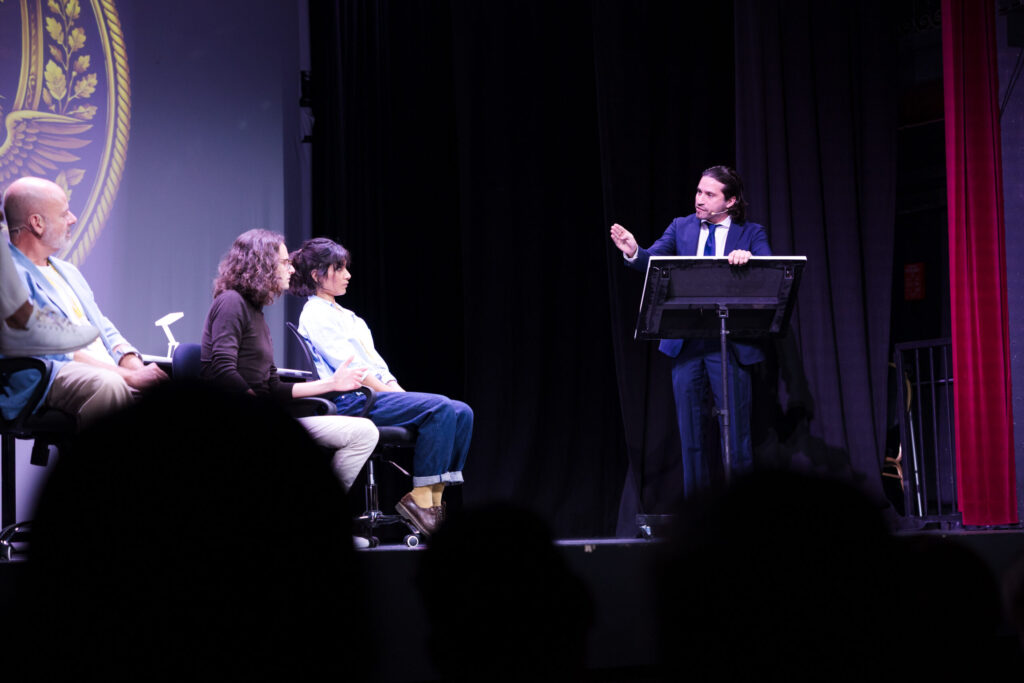
This play returned to the stage on the 18th of September, two weeks after the shocking acquittal of journalist Daphne Caruana Galizia’s alleged murderer. It’s an astounding portrayal of the disappointment and fear felt in a world where the truth seems to no longer matter as much, where facts can be skewed, and where those guilty can continue to act with impunity, managing to bring together a sizable audience. This audience clearly shared a palpable sense of camaraderie, of outrage, of disappointment, and that the truth mattered.
I believe this play would have left me feeling a lot more hopeless had it not been for the protest I attended a couple of days before, calling for justice for the murdered journalist Daphne Caruana Galizia. Seeing thousands of people gathered to lament corruption sparked a bit of hope in me; hope which was strengthened after watching this play. Experiencing this mirror of reality with such clarity, and feeling united with the other audience members through the outrage felt, has reinforced my belief that the truth is still worth pursuing.