
Authorisation to Write
Autorizzazione a scrivere
The ambience at Vincent’s Eco Estate tonight feels familiar. A farmhouse, rustic décor, a bucolic landscape, pretty people in natural fabrics with tote bags, eating organic food. I feel uncomfortable, perhaps because this is my family’s crowd and I can foresee it being mine, too—just give it twenty years. Tonight, though, I fear the guests can tell I have no business being here, that I’m not pretty enough, that I’ve ordered pepperoni pizza from Domino’s for the past three nights, and in fact I’m wearing polyester. But worst of all, I don’t understand poetry.
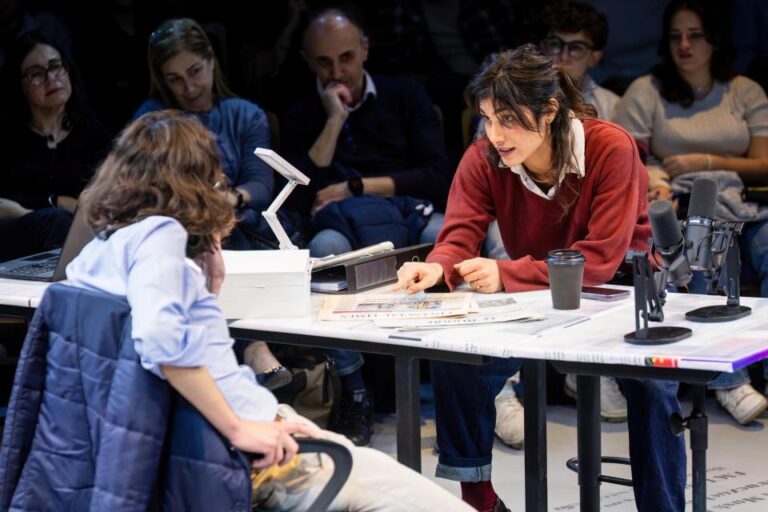
I am well aware that diagnosing others’ snobbery is itself the terminal stage of snobbery. What saddens me is that this educated, leftist, upper-middle-class human type is the regular clientele of a literature festival—which begs the question: who is this poetry for? Who it is about is crystal clear. And perhaps Politics of Motion would have been a more appropriate title for this (righteously) political evening. The readings, especially the work of Syrian author Hamed Abboud and that of French poet and translator Claire Lajus, are populated by images of violence, exile, displacement, and genocide. This is work that should and must exist. And yet it somehow feels morbid, or fetishistic, to consume it here on a country estate, in candlelight, with a glass of red, so far removed from the violence that’s on everyone’s lips—which is by now an echo of a scream so distant it has become a headline, a dinner-party topic, a slogan at a protest, hollowed of any meaning. I feel a surge of guilt for struggling to be moved, for feeling as alienated from these images as from my surroundings.
L’atmosfera al Vincent’s Eco Estate stasera mi è familiare. Un casale, un décor rustico, un paesaggio bucolico, personaggi attraenti vestiti in 100% lino con borse di tela che spizzicano cibo bio. Mi sento a disagio, forse perché questo è il tipo di ambiente in cui bazzicavo con i miei da ragazzinə, o perché tra vent’anni ci sarò dentro anch’io fino al collo. Stasera, però, gli altri ospiti avranno già notato che qui non c’entro niente, che non sono abbastanza bellə, che sono tre giorni che vivo di pizza pepperoni di Domino’s, che il mio gilet è di poliestere. Ma soprattutto, non ne capisco nulla di poesia.
Lo so che puntare il dito contro lo snobismo altrui è lo stadio terminale dello snobismo. Quello che mi deprime è che questo tipo umano, borghese, intellettuale, di sinistra, il cosiddetto radical chic, sia l’habitué delle letture di poesia. E allora viene da chiedersi, ma per chi è questa poesia? E non intendo chi ne sia l’oggetto, di chi si stia parlando, che è lampante. Difatti forse il titolo Politics of Motion sarebbe stato più appropriato per una serata così (giustamente) politicizzata. Le letture, e in particolare i testi del siriano Hamed Abboud e quelli della poetessa e traduttrice francese Claire Lajus, sono popolate da immagini di violenza, esilio, sradicamento e genocidio. Che di guerra si debba scrivere, che sia necessario scriverne, non è in questione. Eppure mi sembra macabro, quasi feticista degustarla in una tenuta di campagna, a lume di candela, con un bicchiere di rosso, anni luce di distanza da questa violenza che è sulla bocca di tutti, e che ormai è l’eco di un urlo così lontano da essere diventato un titolo in prima pagina, un argomento di conversazione a cena, uno slogan a una manifestazione, svuotato di qualsiasi significato. Il senso di colpa mi assale quando mi accorgo che queste immagini non mi commuovono, che me ne sento completamente alienatə, così come dalla compagnia di stasera.
I won’t wallow any longer in my leftist guilt-pride, which is its own narcissistic exercise. World politics and war, besides, are only two of many themes this night of poetry touches upon — so many that a single title might not be enough to contain them. May I suggest, belatedly, a second option: “Authorisation to Write”. (I am joking, never take title suggestions from a humanities academic.) The unfortunate wordplay is borrowed from one of the digressions by the evening’s third guest, the Italian Rosaria Lo Russo, on the female authorial voice in twentieth-century poetry (brilliant digressions which, by the way, are extemporaneously rendered into English with a tragicomic amount lost in translation. This is my appeal to Inizjamed to find qualified interpreters for their multilingual events). Lo Russo — a scholar of women’s poetry, translator of Anne Sexton, and of course herself a female author — speaks of the mid-century turn from lyric, Petrarchan feminine poetry to what she calls the “epic” or narrative poetry of Sylvia Plath, Sexton herself, but also Patrizia Vicinelli and Amelia Rosselli, in terms of a shift in grammatical person. From a you, the female author becomes an I. And yet—Lo Russo reminds us—by daring to authorise herself to write, make herself subject in the patriarchal system that wants her object, a woman often faces systemic capital punishment: Plath, Sexton and Rosselli all took their own lives.
This ominous recurrence is emblematic of an idea that holds the evening together, a leitmotif which, even more than the theme of war, makes sense of these strange poetic juxtapositions: the struggles of giving oneself permission to write; the authorial subject’s (self)suppression and strategies of survival; the questions of art in modernity: “How can I write? How can I exist inside my writing?” I believe these issues are faced, in parallel, by all three authors, in different terms and by different means. Lo Russo’s tool is parody, a sort of earnestly loving mockery of Italian poetic history starting from Dante, whom she at once pays homage to, appropriates, and dethrones like an overbearing father figure. Parody, she points out, means in its Greek etymology not only to mock but to retell, to sing again. The result is an avowedly language-driven, archaicist, phonetically dense poetry in which the author’s personal imagery hides inside deliberately labyrinthine language.
Basta sguazzare nel mio moralismo borghese, che è anche questo una masturbazione mentale. In ogni caso, la guerra e la politica globale non sono che due tra i tanti temi toccati da questa serata di poesia—tanti che, pensandoci bene, un solo titolo non potrebbe contenerli. Suggerisco tardivamente una seconda alternativa: “Authorisation to Write” (sto scherzando, mai accettare consigli su titoli da accademici umanisti). Questo infelice gioco di parole cita uno degli excursus dell’italiana Lo Russo, la terza ospite della serata, sulla voce autoriale femminile nella poesia del Novecento (brillanti excursus che, tra parentesi, vengono tradotti in inglese in simultanea, con un livello tragicomico di lost in translation. Prego e imploro Inizjamed di trovare interpreti qualificati per i suoi eventi multilingue). Lo Russo — studiosa di poesia femminile, traduttrice di Anne Sexton e naturalmente lei stessa autrice — parla della svolta, nel secondo Novecento, dalla poesia femminile lirico-petrarchesca a quella che chiama poesia “epica” o narrativa di Sylvia Plath, della stessa Sexton, ma anche di Patrizia Vicinelli e Amelia Rosselli, in termini di uno spostamento di persona grammaticale. Da un tu, l’autrice diventa un io. Eppure — ci ricorda Lo Russo — osando autorizzarsi a scrivere, farsi soggetto in un sistema patriarcale che la vuole oggetto, una donna va spesso incontro alla pena capitale di quel sistema: Plath, Sexton e Rosselli si sono, tutte e tre, tolte la vita.
Questa inquietante ricorrenza è emblematica di un’idea che fa da filo conduttore alla serata, un leitmotiv che, ancora più del tema della guerra, dà un senso a questi strani accostamenti poetici: il problema dell’autorizzarsi a scrivere; l’(auto)soppressione del soggetto autoriale e le sue strategie di sopravvivenza; le domande poste dall’arte nella modernità: “Come posso scrivere? Come posso abitare la mia scrittura?” Credo che questi nodi vengano affrontati, in parallelo, da tutti e tre gli autori, in termini e con mezzi diversi. Lo strumento di Lo Russo è la parodia, un affettuoso fare il verso alla storia della poesia italiana a partire da Dante, che insieme omaggia, fa proprio e detronizza, come si fa con una figura paterna ingombrante. Parodia, Lo Russo fa notare, nella sua etimologia greca non significa solo canzonare, ma anche rinarrare, cantare di nuovo. Il risultato è una poesia dichiaratamente linguistica, arcaizzante, foneticamente densa, in cui l’immaginario personale dell’autrice si nasconde dentro un linguaggio volutamente labirintico.
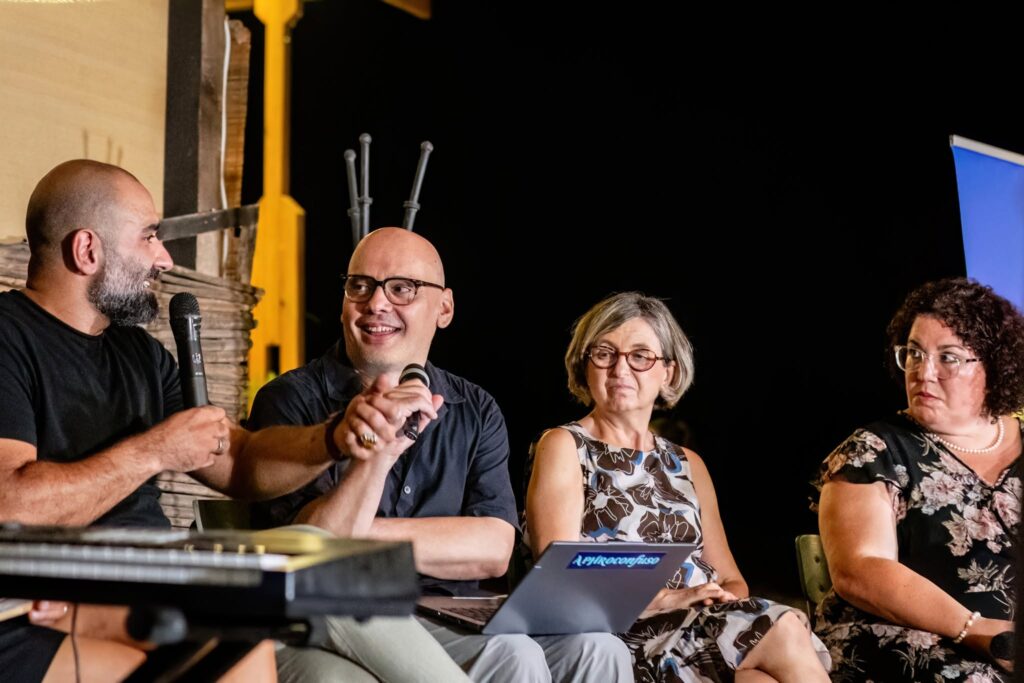
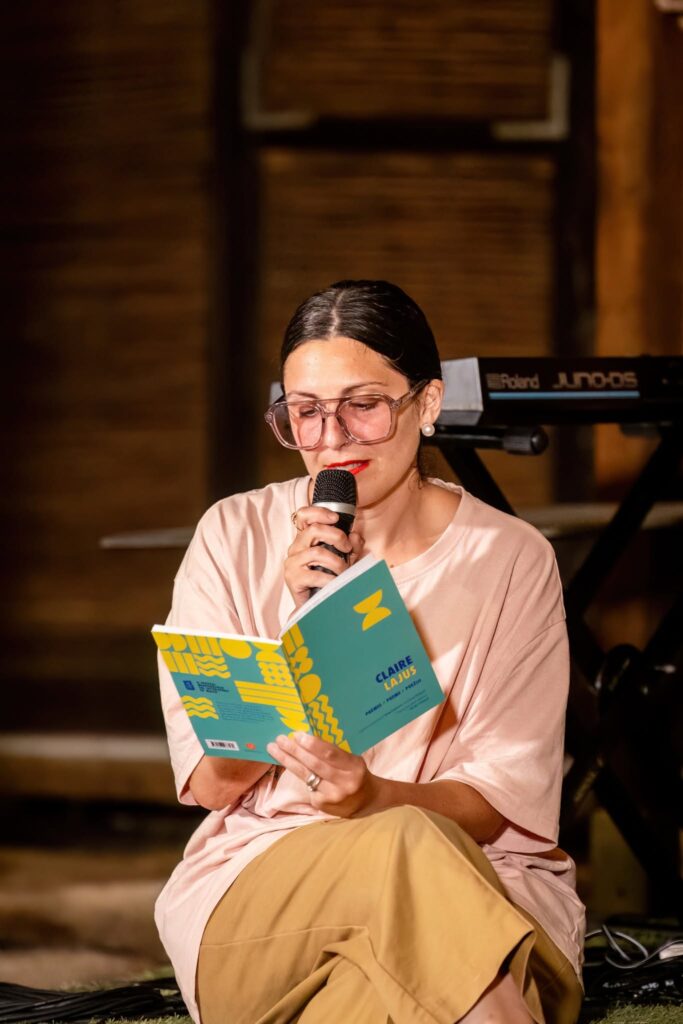
Claire Lajus gives a completely different answer to the same questions: silence, blank space, rather than deliberate excess. Asked about her use of white space and the sparsity of her poetry, she replies: “After Gaza, I feel I have to leave blanks in my poems. I don’t know why.” She may not know why, but the poetic response to her shock at humanity’s barbarism is not without precedent — form is cut to the bone, meaning distilled, discomfort elicited in the reader through blank space; silence is the answer to unspeakable horror. It recalls the hermetic poetry of Ungaretti and the Great War.
Abboud, who has lived in Vienna since 2014, reminisces about the days before war and exile, when his poetry could exist innocently, for the sake of linguistic experimentation, and he could exist within it, gathering personal impressions of love and beauty. His history—he explains—now demands that his poetry have a purpose. In the larger purpose of telling the tales of those who did not survive, he feels he must disappear, hide in a corner, carry the survivor’s guilt, tuck his own love story between pages that must belong to others. In his poetry one senses the drive to break free, to venture towards more abstract, universal themes — love, desire, God — with unspoiled naivety, but Abboud’s tight-lipped humour always intervenes to undercut these aspirations and bring us back to reality.
Alle stesse domande, Claire Lajus risponde per sottrazione: il silenzio, il vuoto, piuttosto che l’eccesso. Interrogata sul suo uso degli spazi bianchi e sulla rarefazione della sua poesia, risponde: “Dopo Gaza, sento di dover lasciare dei vuoti nelle mie poesie. Non so perché”. Può darsi che non lo sappia, ma la risposta poetica al suo sgomento di fronte alla barbarie umana non è senza precedenti: la forma ridotta all’osso, il significato distillato, il disagio provocato nel lettore attraverso lo spazio bianco, il silenzio come risposta all’orrore indicibile, ricordano la poesia ermetica di Ungaretti e della Grande Guerra.
Abboud, approdato a Vienna nel 2014, guarda con nostalgia ai giorni prima della guerra e dell’esilio, quando la sua poesia poteva esistere con innocenza, per il gusto della sperimentazione linguistica, e lui poteva abitarla, raccogliendo le sue personali impressioni sull’amore e la bellezza. La sua storia — spiega — ora esige che la sua poesia abbia una funzione. Al servizio del fine più grande di fare testimonianza a chi non è sopravvissuto, sente di doversi eclissare, mettersi da parte, fare i conti con il senso di colpa di chi invece è sopravvissuto, far scivolare la propria storia d’amore tra pagine che devono appartenere ad altri. Nella sua poesia si avverte la spinta a liberarsi, ad avventurarsi verso temi più astratti e universali — l’amore, il desiderio, Dio — con un’ingenuità intonsa, ma l’ironia amara di Abboud interviene sempre a tarpargli le ali e a riportarci alla realtà.
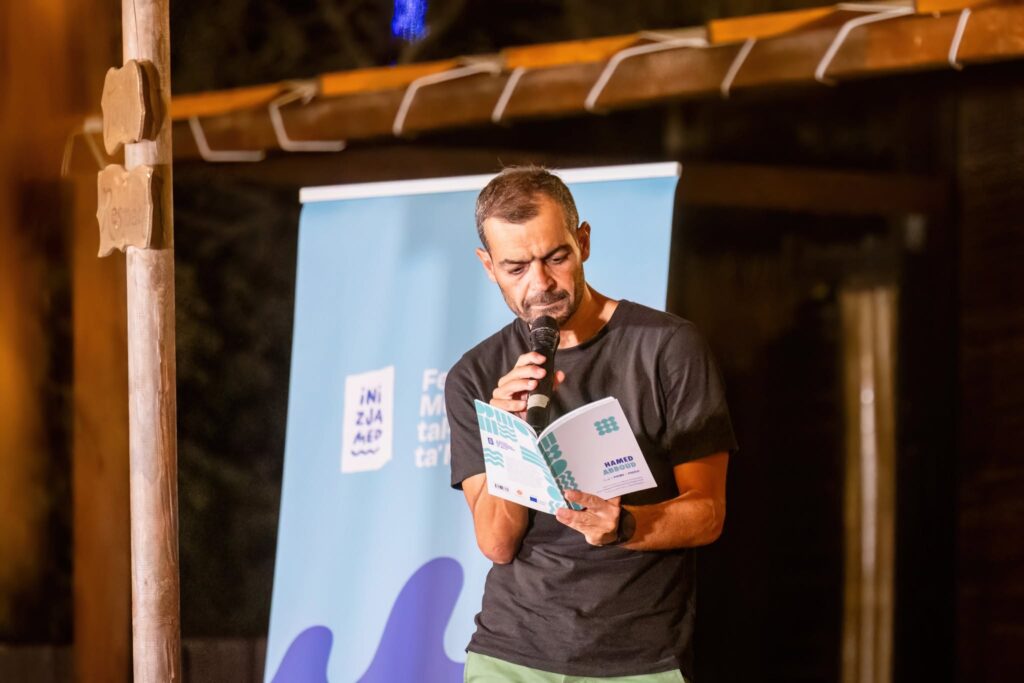
Humour, irony, parody are another common thread among these three outwardly dissimilar authors: a way of coping with the problem of their own authorial existence against the magnitude of tragedy, in the case of Abboud and Lajus, or of history, for Lo Russo. “Humour is resistance,” Lajus says, perhaps unoriginally. I would add that humour is self-consciousness, and both are dominating themes of our post-postmodern, metamodern (or whatever monstrosity of a term you are partial to) poetic horizon.
Now, dear reader, I did warn you I don’t understand poetry — and perhaps I too, in this guise of critic, struggle with authorising myself — so I can offer no verdict on the works themselves. These are the sparse reflections I can share, here in both English and Italian, because I too, like Abboud and Lajus, live between languages, borrow thoughts from one and the other, confuse and contaminate them.
Umorismo, ironia, parodia sono un altro tratto comune tra questi tre autori all’apparenza così dissimili: un modo per fare i conti con il problema della propria esistenza autoriale di fronte all’enormità della tragedia, nel caso di Abboud e Lajus, o della storia, per Lo Russo. “L’umorismo è resistenza”, dice Lajus, forse non originalissima. Aggiungerei che l’umorismo è coscienza di sé, con un certo pudore, e che sono proprio questi i temi dominanti del nostro orizzonte poetico post-postmoderno, metamoderno (o qualsivoglia mostruosità terminologica si preferisca).
Ti avevo avvertito, lettore, che di poesia non ci capisco niente — e forse anch’io, in questi panni da critico, faccio fatica ad autorizzarmi — perciò non sta a me giudicare il lavoro altrui. Queste sono le poche riflessioni che posso offrire, qui in inglese e in italiano, perché anch’io, come Abboud e Lajus, vivo tra due lingue, prendo in prestito pensieri dall’una e dall’altra, le confondo e contamino.
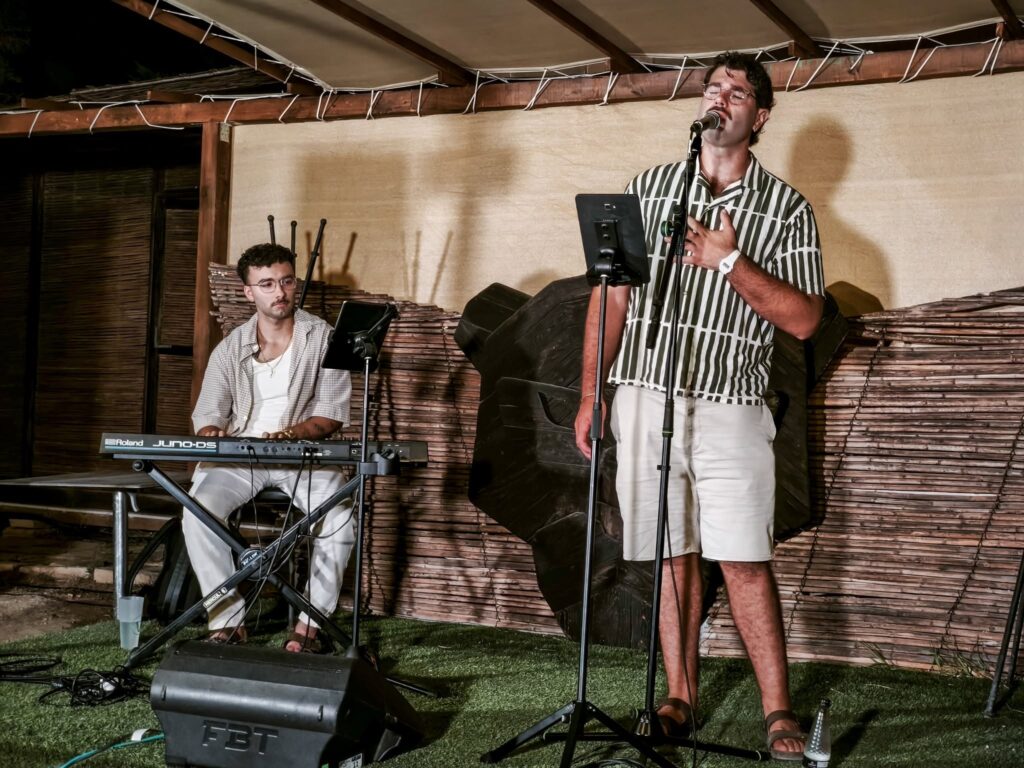
I leave you instead with the only judgement I feel qualified to pass, and an urgent recommendation to discover the music of singer-songwriter Stjanu and his pianist and arranger, Aleandro Spiteri Monsigneur. The duo’s intimate performance is a perfect epilogue to the night and, in my admittedly partial opinion, its apex. Stjanu’s vibrato à la Tony Hadley (minus the ghastly 80s production) leaves me in tears, despite his songs being entirely in Maltese and therefore unintelligible to me, and I am reminded, just as the siren song of literature and poetry was beginning to seduce me, of where my loyalties lie.
Finisco invece con l’unico giudizio che mi sento di dare, e consiglio a chi non li conoscesse di correre a scoprire la musica del cantautore Stjanu e del suo pianista e arrangiatore, Aleandro Spiteri Monsigneur. L’intima esibizione del duo è l’epilogo perfetto di questa serata e, a mio avviso ovviamente di parte, il suo coronamento. Il vibrato di Stjanu alla Tony Hadley (senza l’orribile sound anni Ottanta) mi commuove fino alle lacrime, nonostante le sue canzoni siano interamente in maltese e quindi per me incomprensibili, e mi ricorda, proprio quando il canto delle sirene della letteratura e della poesia stava cominciando a sedurmi, qual è la mia lingua madre.
P.S. Ai miei nonni poeti critici letterati a cui finalmente posso far leggere un mio pezzo: spero di rendervi almeno un po’ orgogliosi, ché ogni volta che scrivo in Italiano, è a voi che sto pensando.
_________________________________________________________________________________________________________________________
The Poetics of Motion: The Malta Mediterranean Literature Festival 2026
Description of event:
The discussion will be interwoven with readings by the four poets, together with the Maltese translations of their work. Stjanu will provide musical interludes throughout the event. Two free trilingual chapbooks featuring the poetry of Abboud and Lajus, published by Inizjamed with the support of Versopolis, will also be distributed. The discussion will be held in English, while the readings will also be presented in their original languages.