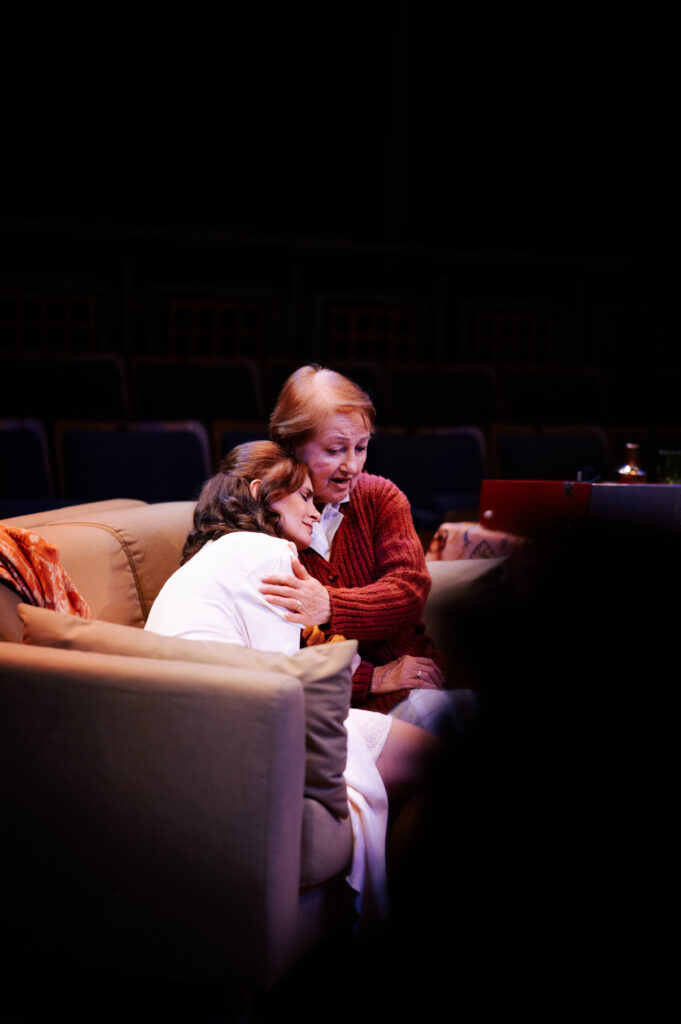

Il-Baħar Ikħal Skur: A well-packaged living-room drama that required better pacing and more dynamic pressure.
Trigger Warning: This review includes mentions of suicide
While Terence Rattigan’s play The Deep Blue Sea was originally published in 1952, its central focus on the suffocating nature of social norms is still as relevant as ever, continuing to inspire further adaptations and revivals. The collaboration team of Sharon Bezzina and Tyrone Grima has now brought this British play to Malta with a translation by Immanuel Mifsud.
The in-the-round setting of Spazju Kreattiv invites the audience into the closeness and intimacy that unfolds in this living-room drama. A short pre-show sequence eases viewers into the space as Hester Collyer (played by Sharon Bezzina) comfortably inhabits her living room through gramophone music, dance and playing cards. The narrative then opens with Hester’s neighbours clamouring into her flat and finding her unconscious body after attempting to take her own life.
The 2-hour long production takes place over the course of one day, as the audience witnesses Hester grappling with difficult situations about love and legality in relation to the men in her life. These men are Sir William Collyer (played by Joseph Paul Vella) – a High Court judge and her ex-husband whose marriage fell apart due to a lack of intimacy – and Freddie Page (Carlos Farrugia) – an ex-RAF pilot and new lover who she feels deeply for yet he refuses to commit to her.
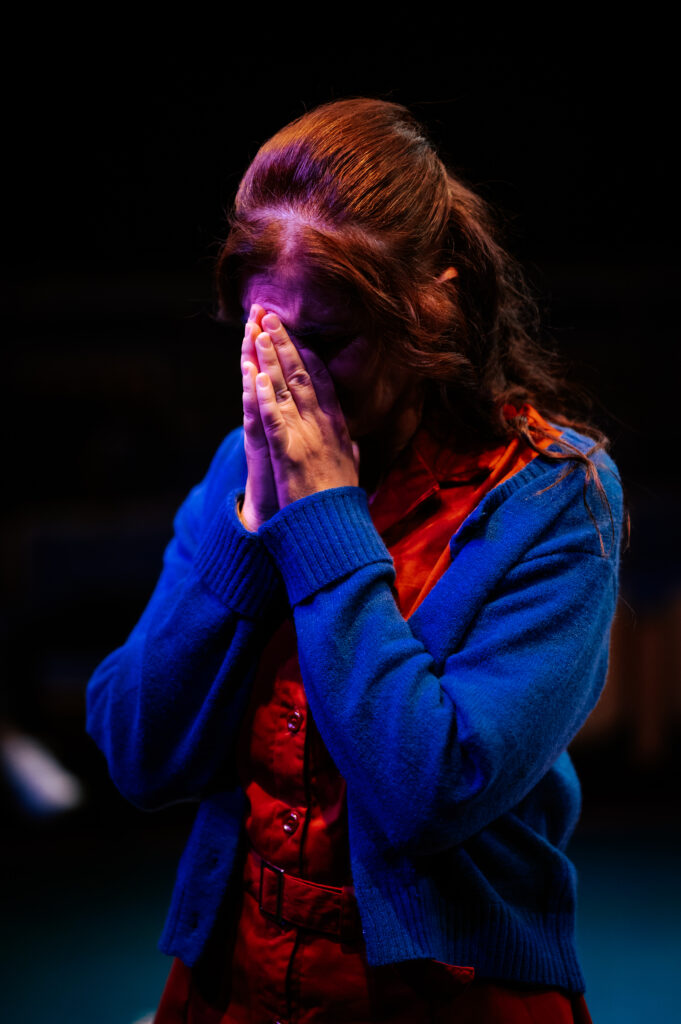
Bezzina’s undertaking of the lead role is a large one, hardly even leaving the stage and requiring a large amount of emotional depth and complexity. It was clear that Grima and Bezzina put in a lot of care when working through Hester’s contrasting dynamics with both men, stemming from deeply complicated emotions. However, towards the play’s middle section, Bezzina’s performance dipped slightly as the character’s thoughts and emotions came out too easily with little sense of struggle, especially considering the high emotional stakes throughout the piece. Vella effectively captured William’s passive and buttoned-up nature, yet could have shown more contrast when showcasing his deep love and admiration for Hester. Their sections together could have also benefitted with more pauses to build out the tension and conflict between the pair. Farrugia’s performance as Freddie was very dynamic and engaging, starting at passionate and outgoing, turning drunken and brash when wrestling with Hester’s desperate actions, and ending with chilling stillness and resolution.

The adaptation cleverly captured the Maltese sensibility of curious neighbours trying to uncover the intriguing and private details of Hester’s personal life. Juan Grima and Robyn Vella’s performances of Philip and Ann Welch respectively provided an interesting dynamic of a responsible husband and nosy wife combination. Balancing this out, Lilian Pace Vassallo breathed warmth and care into her performance of Is-Sinjura Elton, acting as the concerned landlord looking out for Hester in her delicate situation. Outside this trio of tenants stood André Mangion as Is-Sur Miller, who skillfully embodied the character’s mysteriousness as the cold and awkward foreign ex-doctor who still provides Hester with connection and advice when she needs it the most. Joseph Fenech’s portrayal of Jackie Jackson also added some levity to the tension between Freddie and Hester, trying his best to avoid getting fully involved in their relationship problems.
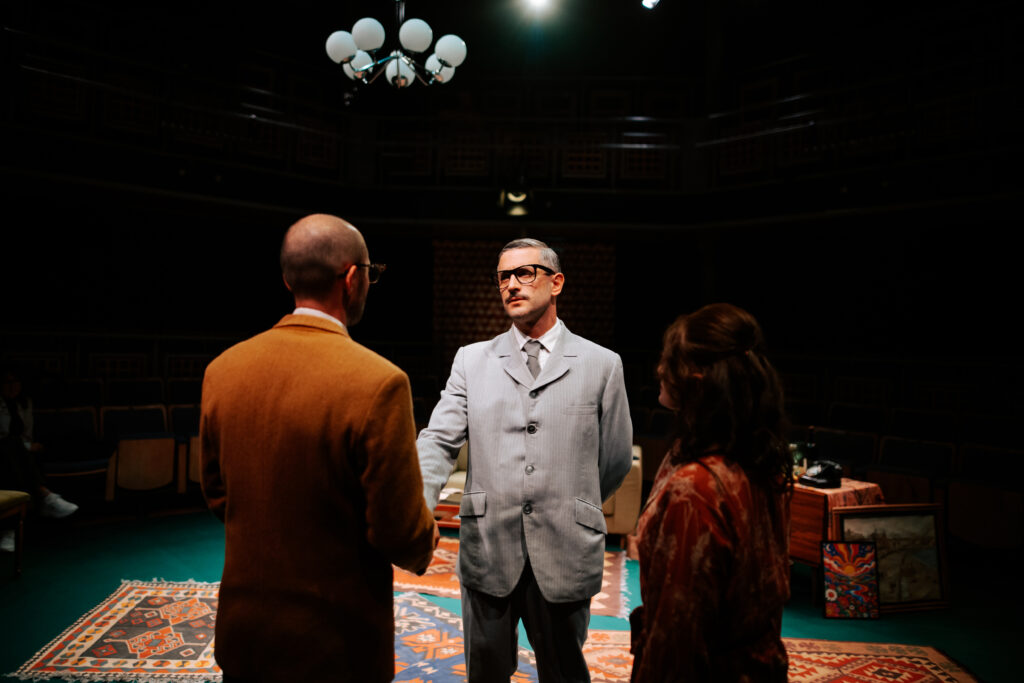
The aesthetic components of the pieces all worked in harmony and synchronicity to really evoke the 1960s context that the piece was set in – the work of Set Designer Romualdo Moretti and Costume Designer Michela Manduca. The space was characterised by a delicious mix of contracting patterns and colours, including green flooring, multiple intricately-decorated rugs, and geometric orange curtains. To contrast, Dali Aguerbi’s lighting design was kept clean and inviting, adding to the cosiness of the living room set-up. It was a subtle yet clever costuming choice to have everyone in bold colours and patterns except for Hester, who started off in a white night-dress and then changed into a dress and coat that were block colours.
On the whole, while the actors gave strong and committed performances, the play itself did feel long and sluggish at points. This is a common disadvantage of “talking plays” such as these, which are centred heavily on character-relationship narratives rather than more event or plot-driven ones. While the packaging of the production felt strong and thought-through, the pacing of the pieces required more peaks and valleys to keep audiences switched on through very long scenes of dialogue. Having peered into the mind of a woman who had reached such a vulnerable position, the audience leaves the show contemplating just how far an individual is willing to go against the confines of traditional societal norms to seek out their own true happiness.