
The Confidence to Be Ordinary: Ġużè Stagno’s Ramon u ż-Żerbinotti
There is a certain cockiness to Ġużè Stagno. It comes across in interviews and in the writing itself. It is difficult to imagine Ramon u ż-Żerbinotti being written apologetically. The novel has too much confidence in its own world for that. Schoolyard obscenities sit beside pop-cultural debris, while teenage sexual preoccupations receive as much attention as bad jokes and petty humiliations. Stagno takes seriously the supposedly insignificant material out of which adolescence is made.
That confidence may partly explain his appeal beyond literary readerships. In a recent Times of Malta interview marking his return to fiction after thirteen years, Stagno recalls that by the time of Ramon u ż-Żerbinotti even somebody selling him a bag of cement would recognise him. More revealingly, he remembers people who did not normally read books reading his work. There is characteristic swagger in the anecdote, but also something significant in it. Stagno does not seem interested in asking permission for the worlds he writes about to qualify as literature.
The novel follows fifteen-year-old Ramon and his schoolmates through an ordinary week. Lessons and studying are interrupted by awkward encounters, sexual urges, friendships, and embarrassment. No grand adventure arrives to impose significance upon any of it. Little happens, and that is the point.
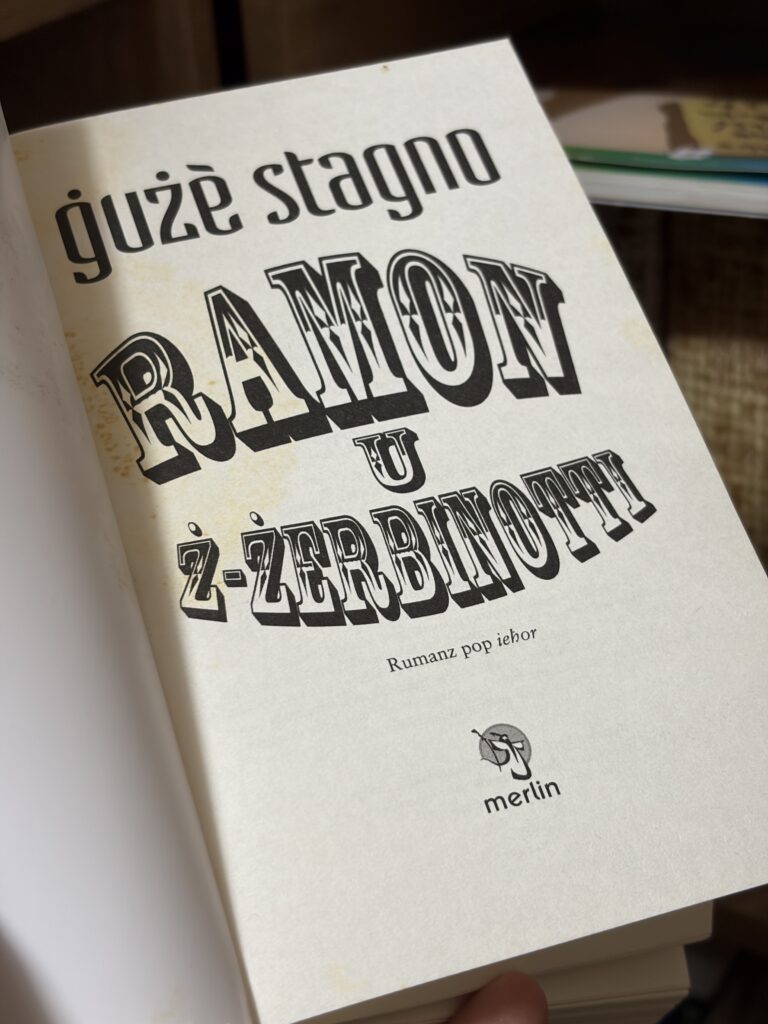
Stagno constructs Ramon’s world through accumulation. The fleeting obsessions of Ramon and his friends gradually acquire historical weight. Cultural references are amusing when recognised, but reducing them to nostalgia would undersell their function. Popular culture helps these teenagers understand what being attractive, grown-up, or ‘cool’ might look like.
Language performs a similar function. The boys speak through vulgarity, code-switching, teasing, and sexual bravado. Conversation becomes social choreography. Jokes establish belonging, insults test status, and boasting disguises uncertainty.
Their vulnerability should not be mistaken for weakness. Ramon’s insecurity is simply part of being fifteen, when the distance between who one is and who one wants others to see can feel enormous. A blemish or an awkward interaction with a girl can suddenly carry disproportionate weight. Stagno’s comedy thrives on this without mocking Ramon from a position of adult superiority. We recognise the absurdity because we know adolescence, and the seriousness because these things genuinely are serious at fifteen.
There is an interesting contrast between character and author. Ramon continually negotiates how much confidence he possesses, while Stagno writes as though confidence were never in question. The prose never nervously distances itself from its vulgarity or insists that its popular references possess deeper cultural importance. It simply assumes that this world merits representation.
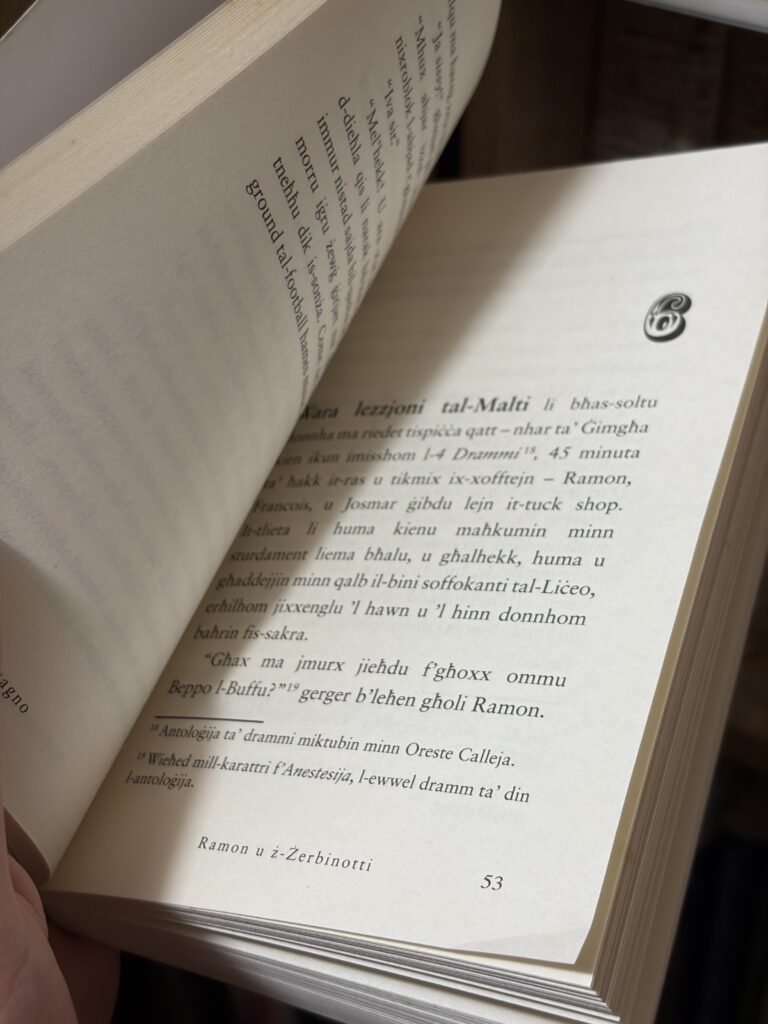
Even the footnotes share that assurance, applying scholarly annotation to slang and teenage minutiae. Beneath the joke lies a genuine archival impulse.
The novel is not without limitations. Some characters remain closer to recognisable schoolyard types than fully developed individuals. The girls are often encountered through the boys’ desire and speculation rather than given comparable interiority. This may convincingly reproduce teenage male consciousness, but at times the distance between representing that gaze and allowing it to dominate becomes narrow.
I was particularly grateful for the novel’s brevity. At a time when I increasingly struggle to stay with the same book for too long, especially a mammoth one, Ramon u ż-Żerbinotti felt almost perfectly proportioned. Each ending offered a small sense of progress and made the next chapter tempting rather than obligatory.
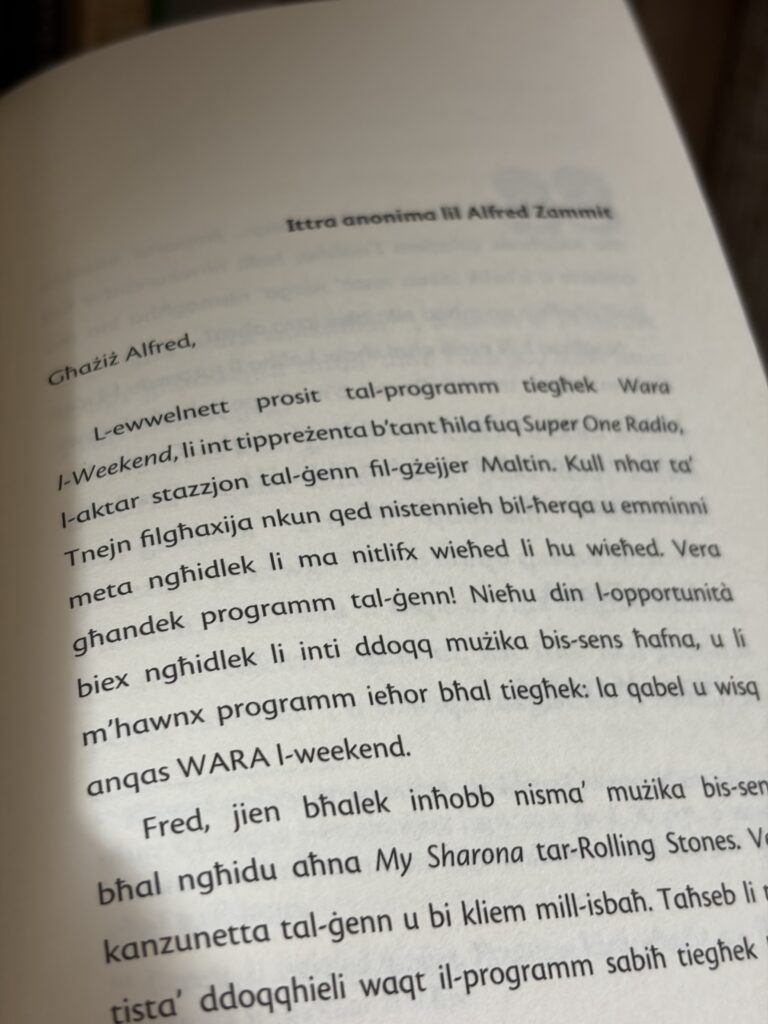
The novel does not inflate one week at school into an epic Bildungsroman. Its brevity feels less like an absence than a form of discipline. Its structure also resembles the way school survives in memory, through scattered lessons, humiliations, jokes, teachers, friendships, and anxieties whose former intensity becomes difficult to reconstruct.
That is why Ramon u ż-Żerbinotti does more than preserve the flavour of a generation. Its references may age, but the social performance underneath them does not. Stagno trusts that ordinary adolescence is enough. He leaves his teenagers crude and funny, sometimes cocky and sometimes painfully unsure of themselves, but above all, recognisable.
Perhaps that is why readers who supposedly did not read found themselves reading him. Stagno does not invite them into literature by pretending their world is something else. He writes as though it belonged there all along.