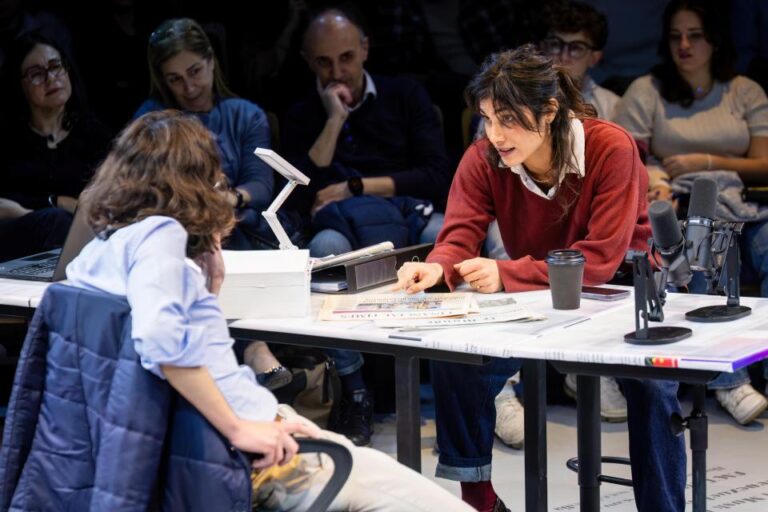

Last Thursday, on behalf of Kritikarti and in collaboration with the National Book Council, I moderated a panel discussion held during the Malta Book Festival, called: “Il-Kritika: Għadha Tgħodd? | Criticism: Does it Matter?” We approached criticism from several angles: its distinction from reviewing, who it serves, the difference between honest criticism and cruelty, and the responsibilities critics carry towards both readers and writers. We also discussed self-censorship, conflicts of interest, anonymity and its potential to democratise participation while simultaneously creating new imbalances of power. Questions of cultural infrastructure, public funding and representation also surfaced.
It was a riveting discussion, and one that merits further analysis. If I had to summarise its underlying sentiment, it would be the need for a change in cultural mentality: first within the sector, and then beyond it. Three words echoed throughout the debate: “Courage”, “Community” and “Knowledge”. I would add a fourth: “Empathy”.
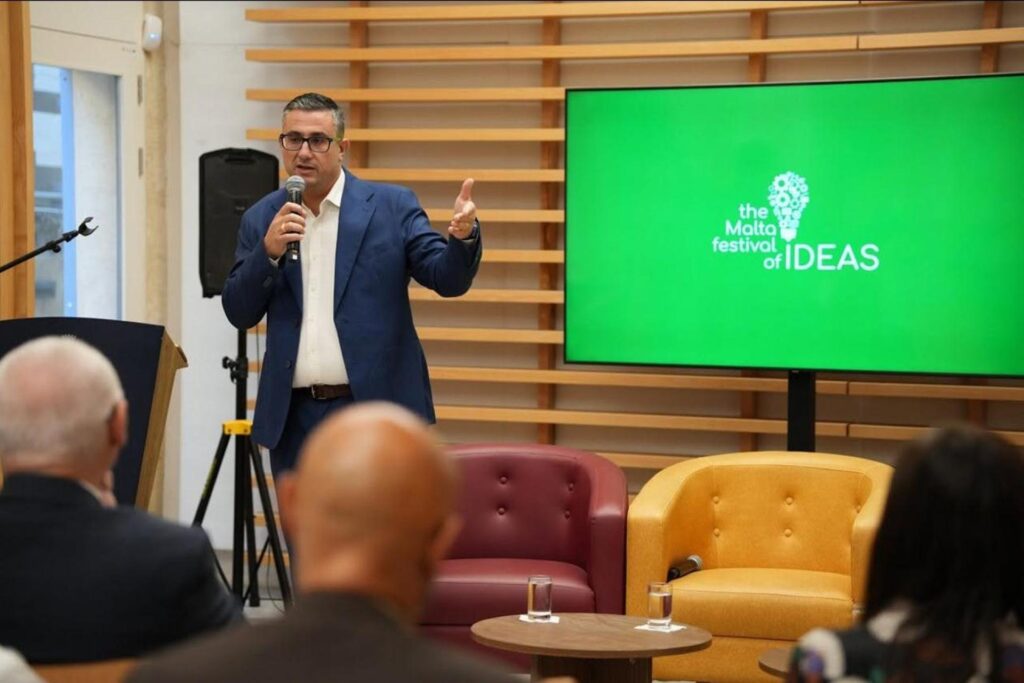
It is with courage, knowledge and empathy that I approach the Minister’s speech on our community. The discussion at the Malta Book Festival raised questions about the responsibilities of those who shape cultural discourse. It seems only fair, then, to extend those same questions to those entrusted with shaping cultural policy. I do love a dramatic moment, and yesterday’s cultural news was no different. From my experience, speeches of this nature are usually drafted and vetted by several members of ministerial personnel. This makes me wonder whether the statements were intended to provoke, whether they were simply poorly considered, or whether they reveal a wider disconnect between the Ministry and the sector it oversees. The irony that such statements were said during a festival titled Festival of Ideas, itself part of the Ministry of Culture’s portfolio, does not escape me. Yet, Oscar Wilde said: “There’s only one thing in the world worse than being talked about, and that is not being talked about.”
Reading the Times of Malta article yesterday morning, I couldn’t help but snort at some of the Minister’s remarkably candid and highly emotive statements. In fact, the honesty was refreshing to hear from a politician, which perhaps says something about where we find ourselves as a society. Were the statements made in ignorance of the subject at hand? Were the click-bait pull out quotes taken out of context? What happens when the people responsible for leading cultural policy understand creativity, responsibility and cultural value differently?
Honesty is our policy. Honest, and just, I shall be. As I dust my university notes on political rhetoric theory, humour me in this exercise, and riddle me this:
Under the Microscope
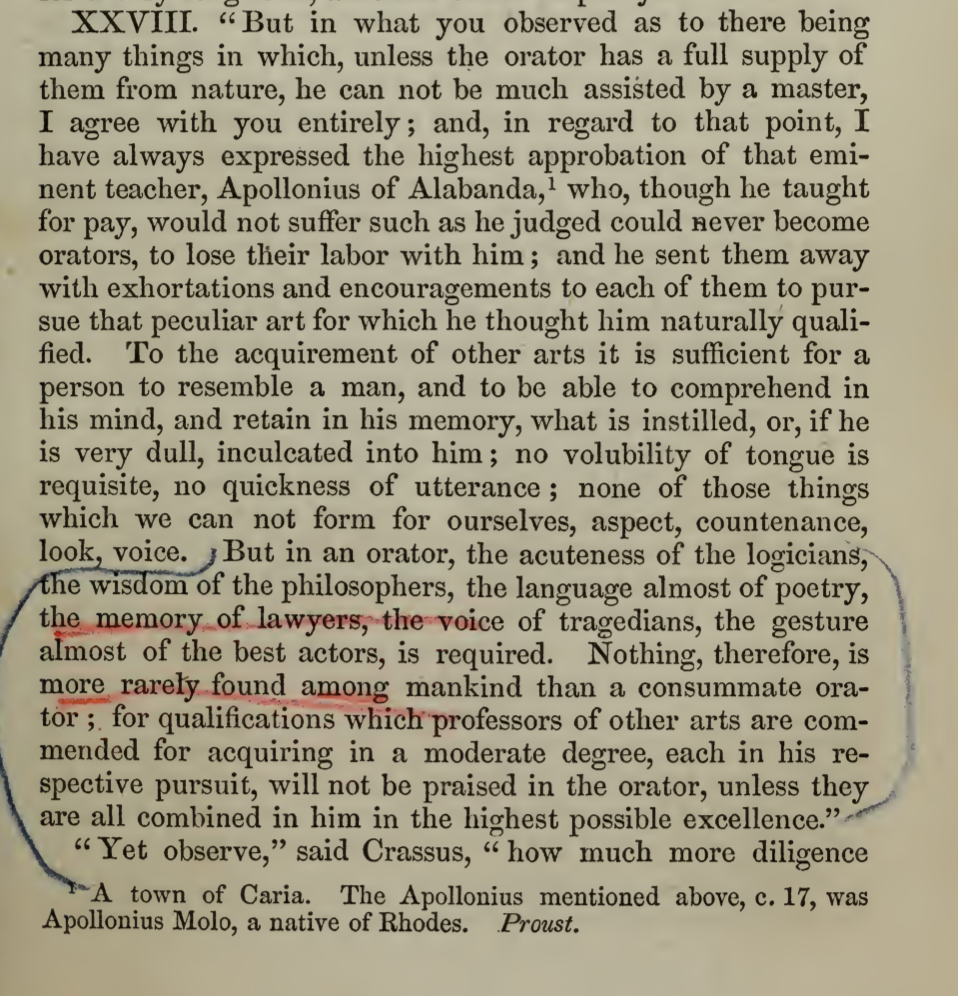
In On the Character of the Orator, Cicero outlines the qualities required of a successful orator, arguing that the role demands a combination of intellectual, rhetorical and performative abilities:
‘But in an orator, the acuteness of the logicians, the wisdom of the philosophers, the language almost of poetry, the memory of lawyers, the voice of tragedians, the gesture almost of the best actors, is required. Nothing, therefore, is more rarely found among mankind than a consummate orator; for qualifications which professors of other arts are commended for acquiring in a moderate degree, each in his respective pursuit, will not be praised in the orator, unless they are all combined in him in the highest possible excellence.’ (Cicero, De Oratore, I.28, p. 175)
Cicero’s understanding of oratory is particularly relevant here because a political speech is never simply a vehicle for information. It is also an exercise in persuasion, character construction and the negotiation of public trust. With Cicero’s understanding of oratory in mind, dissecting the Minister’s 15-minute speech through an audio recording alone presents certain limitations. Tone, gesture, facial expression and the relationship with the audience all contribute to the construction of a political message. Nevertheless, the language itself offers plenty to examine. Examining the rhetoric behind the Minister’s comments on megalomania may help us understand the critique being directed at the cultural sector by the very person entrusted with shaping its policy and strategy.
‘And now, I am seeing that creativity is the order of the day. So, yes, this was one of my main traumas. (nervous chuckle) Besides, having 18 different entities and under your own remit, and everyone thinking that they’re God’s gift to the world, and everyone thinking that they are the most important, part of, Maltese culture, so to say… So, yes, I have learnt to be creative, understand what creativity means, and think about anyone else who is in the room, that they are the “most anointed people in the world”.’
It is here that I fear we, as a sector, may have interpreted the statement primarily as a personal attack. Yet, whether or not it was intended as one, the generalisation remains: the Minister presents those working within Maltese culture as individuals who consider themselves indispensable, or even superior to others. The question, then, is not simply whether the sector should feel offended, but what assumptions underpin such a characterisation.
A retort to the four months on the ministerial seat, Dr Agius Galea shares an intimate view of his court, formed of the select few who are in positions of power within the sector. Confirmation bias refers to the tendency to favour information that supports existing beliefs or expectations, while overlooking or discounting evidence that contradicts them. In this context, it is worth asking whether the Minister’s assessment of the sector is based on a representative understanding of its work, or whether it is shaped by encounters that reinforce an already established perception. It is also unclear whether the Minister has considered organisations and practitioners whose work contradicts this perception, for example, with work by art-led and education NGOs.
Yet, unknowingly, the Minister may have turned this mirror onto himself. In William Shakespeare’s The Tragedy of Julius Caesar, Cassius manipulates Brutus into joining the murder plot by presenting himself as a mirror through which Brutus might recognise what he has yet to acknowledge about himself:
“I, your glass,
Will modestly discover to yourself
That of yourself which you yet know not of” (I.ii.156–158).
The quotation offers an interesting parallel: in attempting to expose the perceived attitudes of others, the speaker may inadvertently reveal something about his own assumptions. The Minister’s reference to “traumatic experiences” during his first four months in office is, at the very least, a striking description of his introduction to the cultural sector. Perhaps “culture shock” would be a more fitting expression.
The Maltese saying il-ħuta minn rasha tinten (the fish rots from its head) also comes to mind. If the Minister’s experience of the sector has been shaped by a relatively small circle of individuals in positions of influence, can that experience reasonably be extended to the sector as a whole? To characterise an entire community of artists and cultural practitioners through the behaviour of a select few is, in itself, a form of generalisation.
Et tu, Dott.?
The Irrationalisation of Creativity
While the Minister appears to use “irrational” to describe what he considers illogical approaches to creativity, his choice of language also invites a broader reflection on Max Weber’s concept of rationalisation, particularly within modern bureaucratic systems and contemporary democracies.
I take the Weberian understanding of rationalisation as a process through which tradition, emotion and, in some contexts, magic are increasingly displaced by calculation, efficiency and bureaucratic rules. Yet this hyper-rational order can generate irrational consequences of its own. The Minister’s association of creativity with irrationality is particularly interesting in a world increasingly shaped by capitalist tendencies and administrative systems. The red tape surrounding public administration can remove the very space for experimentation, intuition and uncertainty that creative processes often require. Creativity does not necessarily exist outside all structures; rather, it is compromised when those structures become so rigid that they leave little room for deviation.
Consider the expectations placed on cultural organisations through public funding. They are often required to demonstrate measurable outputs, clear, short timelines, and predictable outcomes, even when the work being developed depends on research and development, experimentation, and processes whose results cannot always be anticipated. Accountability is necessary, but when the means of measuring cultural value become more important than the work itself, the system risks undermining the very creativity it claims to support. Creative work can, and often does, happen within structures and formal frameworks. The problem is not necessarily the existence of rules; it is when those rules become so rigid that they limit experimentation and artistic autonomy.
“Being creative means you’re being presumptuous” is a statement that deserves unpacking. Presumption can suggest arrogance, overstepping or making bold assumptions. On its own, the statement is striking and can easily be interpreted negatively. However, taking the surrounding context into consideration, I would like to entertain a more generous reading: perhaps the Minister was referring to the relationship between artists and audiences, and to the importance of considering the people for whom art is created. This does not mean that art must conform to audience expectations, nor that the artist’s role is to satisfy an audience. Rather, the encounter between the work and its audience is part of what allows meanings to emerge. The artist retains the agency to create, challenge, and provoke; the audience retains the agency to interpret, question, reject or embrace. The relationship is reciprocal, but it is not necessarily one of agreement. In a lecture in 1954, Johannes A. Gaertner discusses the notion of art for an audience:
‘It comes with a shock for most of us to realize that without an audience there is no art. There is only the artistic intent of the artist embodied in his work or effort which thus constitutes a stimulus, but there is no art unless that stimulus acts upon an audience.’ (Gaertner, Art as the Function of an Audience, p81)
Gaertner further defines that art through axioms, where art is defined as an action, and the result is the work of the action (art), the space where this action happens in the mind of the audience and, very definitively, “the work of art is a stimulus, a symbol, and a challenge” (Gaertner, Art as the Function of an Audience, p82).
The suggestion that creative perspectives are inherently skewed is problematic. If the relationship between artist and audience is necessary for art to take place, then the agency of both must be acknowledged. Gaertner’s argument suggests that reducing art to a single definition or prescribed norm is inherently limiting. Artistic practice cannot be assessed through one fixed framework without risking the exclusion of the very ambiguity, plurality and exceptions that give it meaning:
“There is no law to define anything by just one paraphrase. If in the exact sciences a thing can or must be defined in one way and one way only, that is just too bad and shows the spiritual poverty of pure science. In the Geisteswissenschaften, where we deal with ideas, a definition is the better, the richer and more manifold it is. And, of course, in contrast to the sciences it always admits exceptions.” (Gaertner, Art as the Function of an Audience, p82).
Gaertner argues that defining anything by one norm would present itself as reductive, and prescribing scientific methodology towards art is contradictory, ultimately diluting the work of art and art itself into non-art. The audience is not simply a consumer whose preferences dictate what gets created. Nor is the artist entirely independent of the people who encounter their work. There is a relationship between artistic intention, the work itself and the audience’s interpretation:
- Artists have the agency to create, experiment and challenge.
- Audiences have the agency to interpret, question, reject or embrace.
- Cultural institutions have a responsibility to facilitate this relationship, rather than prescribe its outcome.
The power to define cultural norms is also the power to influence which forms of expression are legitimised, supported or marginalised, this is where freedom of expression should evermore be protected, and the manifold of definitions more embraced. The question of who gets to define cultural norms is not an inconsequential one. When institutions or political authorities acquire the power to determine which forms of expression are considered acceptable, they also acquire the power to legitimise some voices while marginalising others. At a time when neo-fascist and authoritarian tendencies are gaining ground across Europe and the West, the protection of freedom of expression becomes all the more important.
In the Humanities, the relationship between irrationality and norms is far from straightforward: what is considered irrational in one context may be understood as necessary experimentation or resistance in another. It is here that I challenge the concept of norms as prescribed by the Minister, and question whether “norm” was indeed the correct term in this context. If we are defining “good” and “bad” art, that might deserve an entire article of its own.
Sound of Silence
The sustainability of ideas is a principle that should become a cultural value in its own right, extending across different sectors and industries rather than remaining the responsibility of the cultural and creative sector alone. “Legacy” has also become something of a buzzword over the past five to ten years, appearing in countless public funding applications, policies and strategies. While the Minister’s emphasis on legacy is understandable, he does not clearly outline how sustainable practices or legacy frameworks are expected to be embedded within the sector. It would have been useful to understand what the Ministry expects from cultural organisations and practitioners in this regard.
And while we are left to reflect on what could constitute a sustainable idea, the Minister presents us with two important ingredients towards idea generation: time and silence. Both are increasingly difficult to protect within a sector that is expected to deliver, produce, report and demonstrate its value continuously. If the sector is expected to produce sustainable ideas and lasting legacies, it needs the conditions to develop them, which require more than funding and measurable outputs. Time for research, reflection, observation and experimentation should become part of that infrastructure and conditions, where ‘silence’ is the space needed to think before producing.
This also brings me to the relationship between culture and wellbeing. Time and silence are not only necessary for the development of creative work; they also allow audiences the opportunity to pause, observe and engage critically with what they encounter. In a society increasingly organised around productivity and constant stimulation, such moments of reflection are valuable in themselves. The Minister refers to a violin concerto as an example of how a cultural experience can create space for critical engagement. This is an important observation: culture serves as entertainment and can also create the conditions for reflection, learning and wellbeing.
Artists do not simply communicate ideas to audiences. They can also create the conditions in which audiences begin to question, interpret and generate ideas of their own. This is where the relationship between artistic practice and public engagement becomes particularly important. I agree that the community should be central to the development of relevant ideas. However, this also raises a question: how does the Ministry intend to create the time, space and conditions necessary for meaningful engagement with those communities?
Qu'ils mangent de la brioche.
Rousseau’s account of the famous phrase “Qu’ils mangent de la brioche” has found a rather fitting place in the sector’s counter-critique of the Minister’s speech. The phrase has come to symbolise the disconnect between those in positions of power and the realities experienced by the people they govern. This understanding of success is particularly concerning when applied to the cultural sector. Ticket sales may indicate audience interest, but they do not necessarily reflect the full value, cost or long-term sustainability of a cultural project. Nor does a successful event automatically mean that the organisation behind it is financially secure. Cultural value cannot be reduced to gate receipts, just as the success of an artistic project cannot always be measured through its immediate commercial return.
A few days ago, the Times of Malta published a vox-pop asking members of parliament about their reading habits. The responses, particularly those from members who had not finished a book in months or even years, make for an interesting reflection on the relationship between political representation and cultural engagement. Of course, reading habits alone cannot measure a person’s cultural literacy or intellectual curiosity. Nevertheless, they invite a broader question: how closely do those entrusted with shaping cultural policy engage with the cultural and intellectual practices they are expected to support?
The Cultural Participation Survey 2016, conducted in collaboration with the National Statistics Office and the Valletta 2018 Foundation, sought to understand how the arts and culture form part of people’s lives, including their attitudes, preferences and reasons for participating or not. Among its findings was that 55.5% of respondents had not read a single book in the preceding twelve months. More recent Eurostat data, relating to 2022, presents a strikingly similar picture, with 56% of people in Malta reporting that they had not read a single book during that year. The 2026 research, conducted by Prof. Vincent Marmarà and presented at the National Book Conference, found that the average person in Malta purchases three books per year. Whether those books actually make it off the shelf and get read is a whole different story. The question, then, is not whether we have the means to understand cultural participation in Malta, but what we choose to do with the knowledge already available to us.
Perhaps the more uncomfortable question is whether our elected representatives reflect the cultural priorities of the nation, or whether they also have a responsibility to help shape them. It is here that I reflect on the work undertaken by Arts Council Malta, particularly over the past decade. This includes ArtWorks, which addresses literacy and the arts as a viable profession; discussions on the professionalisation of arts education, including the vision for a National Academy of Visual and Performative Art; accessibility mapping research for public cultural organisations, including the entities mentioned by the Minister; and the Charter of the Status of the Artist, which gives expression to the principles of the UNESCO 1980 Recommendation. This body of work raises an important question: to what extent is the knowledge already gathered informing the decisions and priorities of those responsible for cultural policy and leadership?
Returning to Cicero, who considered the skills of actors, tragedians and poets essential to the consummate orator, there is a certain irony in expecting those who shape public discourse to champion culture while appearing so disconnected from some of its most fundamental practices.
Bibliography
Arts Council Malta. (2024). Charter for the status of the artist. https://artscouncilmalta.gov.mt/wp-content/uploads/2025/01/Copy-of-Copy-of-0572-%E2%80%93-Charter-of-the-Status-of-the-Artist-Final-Document-EN.pdf
Arts Council Malta. (2024, June 27). New ArtWorks campaign seeks to encourage and facilitate careers in the arts. https://artscouncilmalta.gov.mt/en/new-artworks-campaign-seeks-to-encourage-and-facilitate-careers-in-the-arts/
Arts Council Malta. (2025, October 31). National conference explores vision for the National Academy of Visual and Performative Art in Malta. https://artscouncilmalta.gov.mt/en/national-conference-explores-vision-for-the-national-academy-of-visual-and-performative-art-in-malta/
Arts Council Malta. (2025). Accessibility mapping research for public cultural organisations: Final report. https://artscouncilmalta.gov.mt/en/publication/accessibility-mapping-research-for-public-cultural-organisations-final-report/
Borg, N. (2024, August 12). Read and weep: Over half of Maltese don’t read a single book in a year. Times of Malta. https://timesofmalta.com/article/read-weep-half-maltese-don-t-read-single-book-year.1096570
Cicero. (1860). Cicero on oratory and orators (J. S. Watson, Trans.). Harper & Brothers. (Original work published ca. 55 BCE)
Ellul, D. (2026, November 7). From biographies to children’s books: This is what Malta’s MPs are reading. Times of Malta. https://timesofmalta.com/article/party-leader-biographies-aviation-law-malta-mps-reading.1136721
European Commission, Eurostat. (2024, August 9). Younger people and women in the EU read more books. https://ec.europa.eu/eurostat/web/products-eurostat-news/w/ddn-20240809-2
Eurostat. (2024). Persons reading books in the last 12 months by sex, age, educational attainment and number of books(Data set: ilc_scp27). European Commission. https://ec.europa.eu/eurostat/databrowser/view/ilc_scp27/default/table?lang=en
Gaertner, J. A. (1955). Art as the function of an audience. Daedalus, 86(1), 80–93. https://www.jstor.org/stable/20026390
Marmarà, V. (2026, May 12). Average Maltese person buys three books a year, survey finds. National Book Council. https://ktieb.org.mt/news-en/average-maltese-person-buys-three-books-a-year-survey-finds/
Muscat, M. (2025). ArtWorks: Education and career pathways in the arts. Arts Council Malta. https://artscouncilmalta.gov.mt/wp-content/uploads/2025/10/2025-06-06-ARTworks-Booklet-v8-EN-LOW.pdf
National Statistics Office. (2017). Cultural participation survey 2016. Arts Council Malta, National Statistics Office, and Valletta 2018 Foundation. https://nso.gov.mt/wp-content/uploads/Cultural-Participation-Survey-2016.pdf
Shakespeare, W. (n.d.). Julius Caesar (Act 1, Scene 2, lines 156–158). Open Source Shakespeare. https://www.opensourceshakespeare.org/views/plays/play_view.php?WorkID=juliuscaesar&Act=1&Scene=2&Scope=scene
Szelényi, I. (2015). Entzauberung: Notes on Weber’s theory of modernity. International Political Anthropology, 8(1), 5–14.
UNESCO. (1980). Recommendation concerning the status of the artist. https://www.unesco.org/creativity/en/1980-recommendation-concerning-status-artist