
Monochrome Memories and Shimmering Beats: ŻfinMalta Triumphs with UNFOLD
As the auditorium lights dim, the crisp, ASMR-like sound of rustling pebbles begins to echo through Teatru Manoel. The audience’s murmur dissolves into silence as all eyes turn to the rising curtain for the premiere of Matthew William Robinson’s latest work. A thick fog envelops the stage, spilling over the edge and creeping into the stalls, instantly drawing us into the performance. Silhouetted figures stand with their backs to the audience beneath a moving overhead light, immediately establishing the haunting, atmospheric tone Robinson set out to achieve. As the fog settles, it reveals a stage draped in a stark white dance floor that rises into a subtle elevation upstage.
Sudden blackouts puncture the performance, slicing the narrative into distinct scenes and keeping the audience on the edge of their seats, eagerly anticipating what will unfold next. In one striking sequence, four dancers march onto the stage holding black flags—a poignant nod to BORDER, the accompanying piece of this diptych, which premiered earlier this year. The flag-bearers move in perfect, fluid unison, juxtaposed against five dancers standing frozen in the background to create a visually arresting composition.
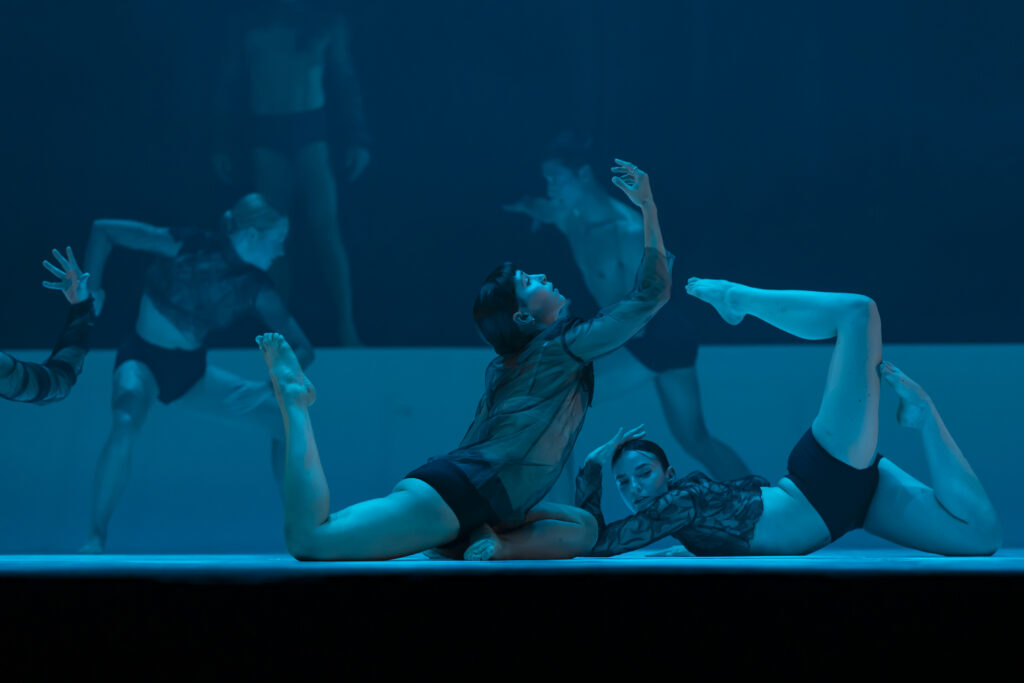
NATION was conceived as a tribute to a world Robinson imagined during his childhood. Whether by pure coincidence or sheer artistic brilliance, he strips away colour for the majority of the performance, creating a monochrome landscape that feels like an ode to the past or a glimpse into an alternate reality. By limiting the palette, Robinson cleverly forces the viewer to focus on the compositional elements that evoke the piece’s raw emotional core.
This vision is beautifully supported by Azzopardi Studio’s expertly crafted costumes, which capture the dismantling of reality while preserving fragments of the past. These garments were clearly designed to interact dynamically with Dali Aguerbi’s stark lighting and Tom Van Malderen’s minimalist set design, perfectly embodying the tensions set out to be explored within the work.
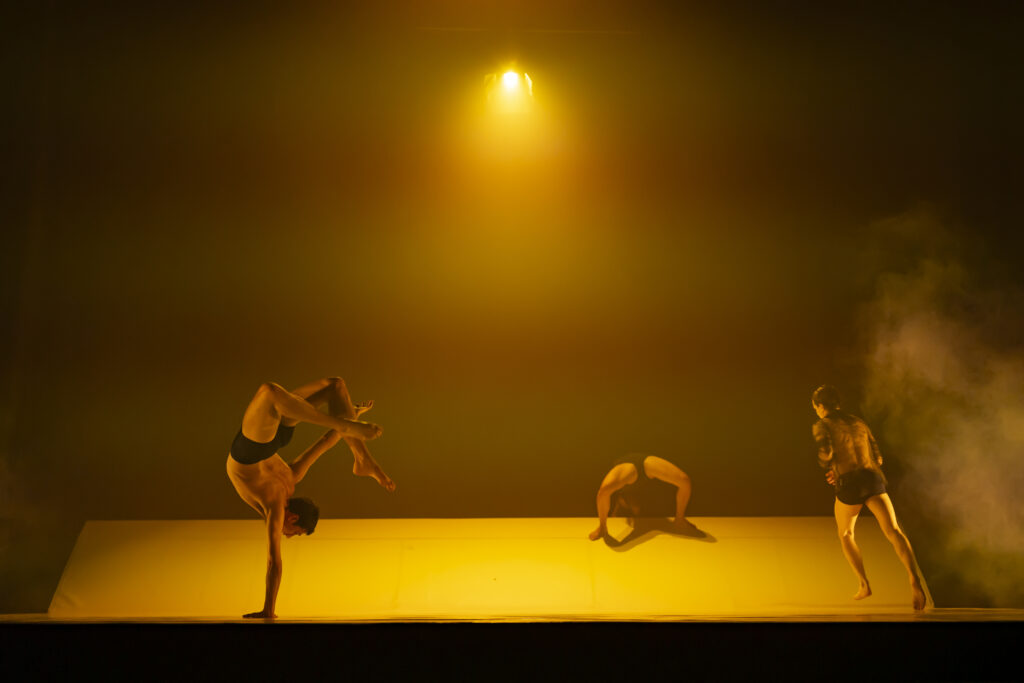
This black-and-white aesthetic is momentarily shattered by a sudden injection of blue-green light. As if breaking through ice, the dancers surge across the stage, weaving in and out of duets and trios. Slowly, a warmer white light creeps in like a thawing winter, guiding us into a remarkably raw section; a delicate duet unfolds downstage whilst a cluster of bodies lies piled on the slanting edge of the set. Suddenly, a synth-heavy shift in the score and a flash of deep red light break the fragility of the moment. The dancers converge once more as a young girl enters, taking one of the performers by the hand and leading them to the centre of the stage. As the lighting snaps back to that signature, stark white, returning us to the monochrome world, a final blackout leaves only the young girl standing alone in the centre, accompanied by the solitary sound of birdsong. It is a truly powerful ending to an exceptionally powerful piece.
For those who had already seen BORDER, expectations for NATION were undoubtedly high. It is a testament to Robinson’s artistry that he does not just meet those expectations, but he expertly exceeds them.
Following a brief interval, the curtain rose on SWAY, a second premiere created for ŻfinMalta by choreographer Diego Tortelli. The stage was transformed into a stark, black void occupied by nine dancers dressed in trousers with a shimmering material. The tinsel-like material caught the light beautifully, adding a dynamic layer to the piece as if the garments themselves were dancing. Tortelli utilised the entire space; the dancers strode from upstage right down to the apron, stepping onto the covered orchestra pit with the commanding presence of a fashion runway.
The structure and immaculate unison of SWAY conjured the image of a conveyor belt, with dancers seamlessly emerging from and disappearing into the wings. A sudden fade to black transported us to the next section, where the collective gathered in the centre of the stage. Here, the lighting hit them like rays of sunlight piercing through the cracks of a derelict building, perfectly illuminating their synchronised movements.
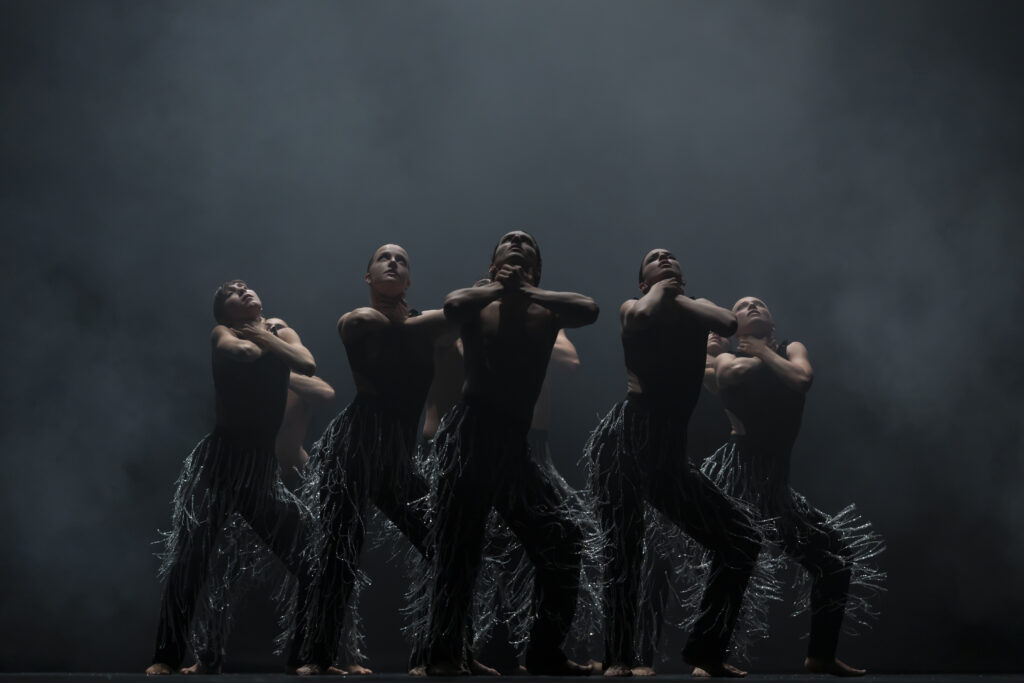
The ensemble then fractured into four distinct groups. From a moment of absolute stillness, they began to move, initiating the sequence with a sharp, perfectly unified twitch of the head. To blink during Tortelli’s work is to risk missing these incredibly subtle transitions. One moment, all nine dancers were moving in that relentless, conveyor-belt rhythm, and the next, the stage cleared to reveal a single, dynamic duet.
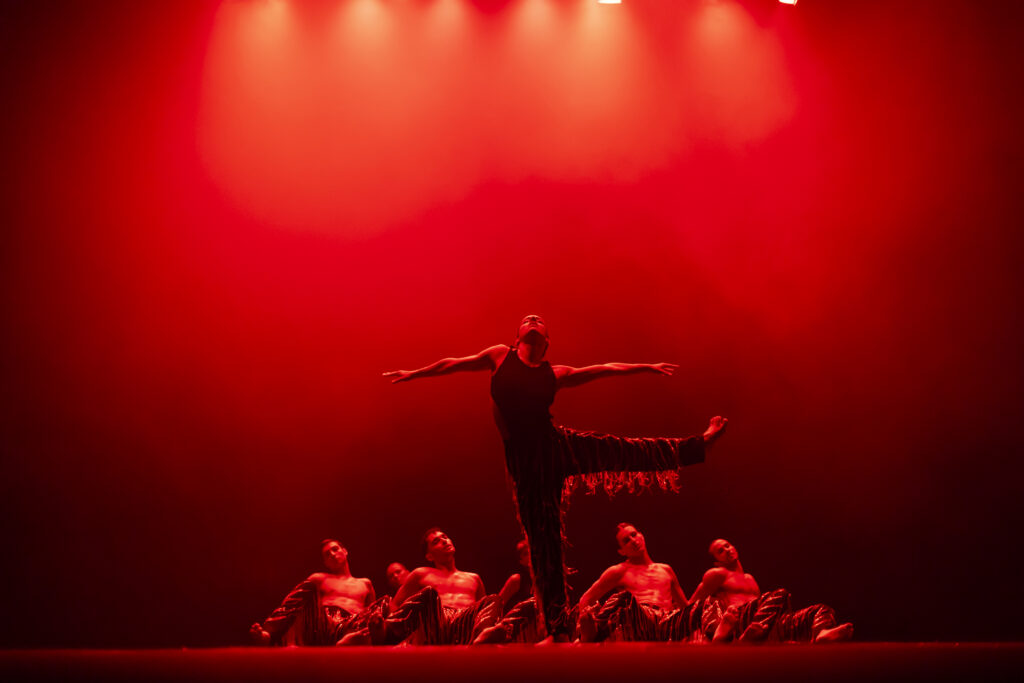
Another sharp blackout transitioned us into the next phase of this mesmerising performance, bathing the stage in a saturated red, the kind of hue instinctively associated with love, lust, or even blood. On the floor, the ensemble moved in unison with a cradle-like rocking motion, offering a stark contrast to a lone solo dancer. A sudden strobe effect diffused the crimson glow, shifting the energy as the company broke into four pulsating duets. Tortelli set out to merge the energy of the dancers with the heartbeat of the audience, a feat that was undeniably achieved.
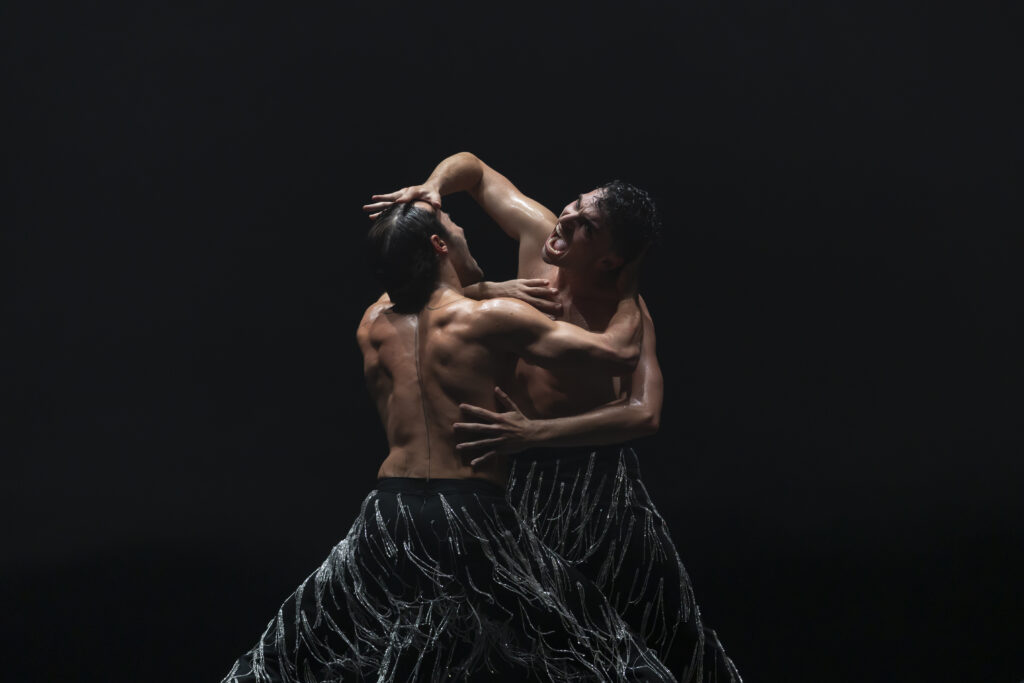
The curtain coming down seemingly early should have been a hint that there was more in store. As the dancers took their bows, a sudden flicker of light within the auditorium and the re-emergence of the score provided a highly welcome surprise. The dancers continued to perform, remaining solely on the orchestra pit, with only two dancers stepping back onto the main stage. Following a sudden halt, a lone dancer on the pit began to jog on the spot. Suddenly, the orchestra pit began to lower, engulfed by a piercing white strobe light, a breathtaking finale that left the audience in pure awe of the genius behind the work.
Try as I might, words feel inadequate to convey the sheer power of the evening. UNFOLD brought visionary work to the stage and further solidified ŻfinMalta’s remarkable artistic evolution.