
The President’s Cake: Life Under Saddam is No Trifling Matter
As directorial debuts go, they don’t come much stronger than Hasan Hadi’s The President’s Cake. Iraq’s official selection for the Academy Awards is the director’s first feature—with only the 2021 short Swimsuit previously to his name—yet it is an incredibly confident work that navigates deeply challenging themes.
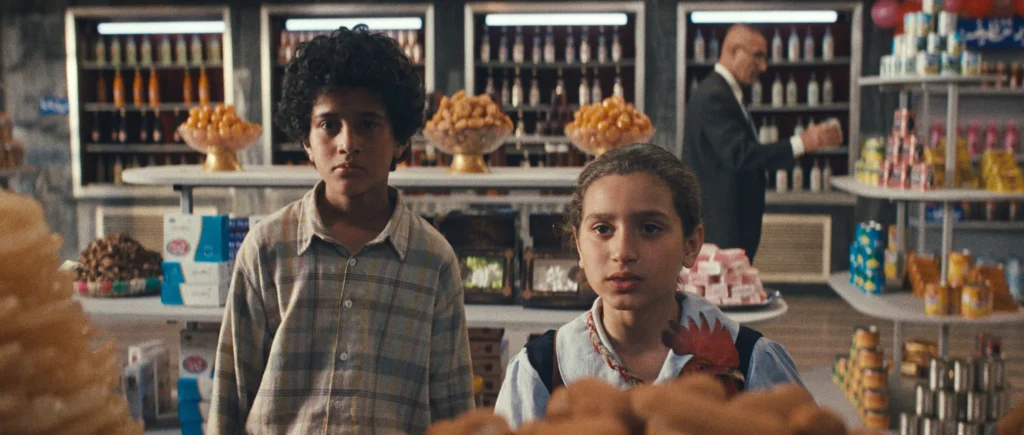
Hadi’s achievement is all the more impressive given the old Hollywood adage: “Never work with children or animals.” Here, Hadi places both at the very center: a young girl named Lamia (Baneen Ahmad Nayyef), her pet chicken, and her best friend Saeed (Sajad Mohamad Qasem).
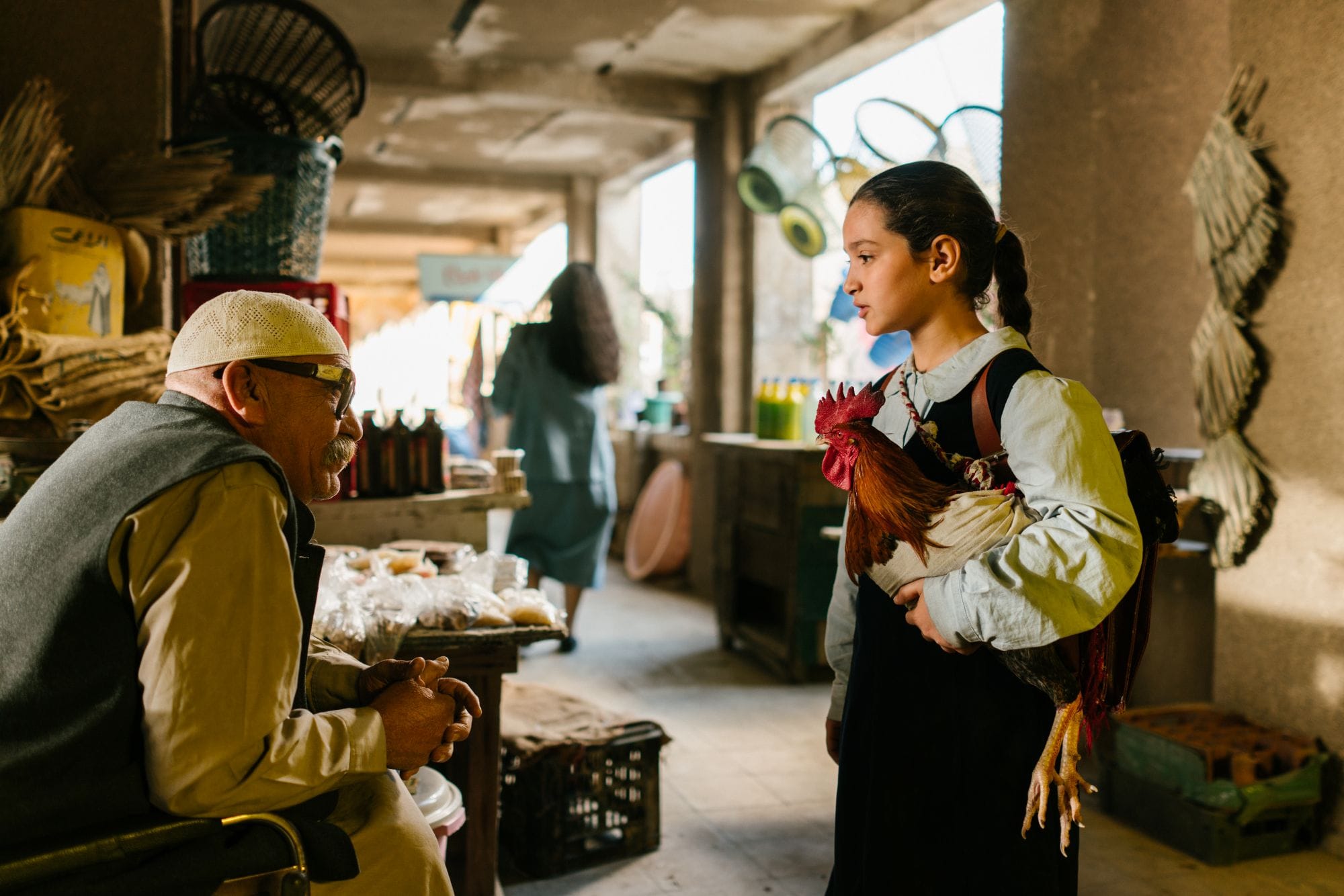
The story is set in 1990s Iraq under the heavy shadow of Saddam Hussein’s dictatorship and the Gulf War. Lamia is tasked by her teacher with bringing a cake to school to celebrate the tyrant’s birthday. After being taken to Baghdad by her grandmother, Bibi, with the intention of being placed with foster parents, Lamia flees into the city with her cockerel, Hindi, in hand. There, she reunites with her classmate Saeed, and the pair embark on a hunt for the cake’s ingredients.
There is a classical quality to the storytelling that should help the film transcend the “arthouse” crowd and find mainstream popularity. In its depiction of an impoverished child scraping by in a cruel city, the film is reminiscent of Dickensian works like Oliver Twist. It also leans into a fable-like structure: a child tasked with a simple errand who becomes waylaid as predatory figures lurk in the periphery.
The script was co-written by the venerable screenwriter Eric Roth (Forrest Gump and Munich, to name a few). Roth and industry titan Chris Columbus (director of the first two Harry Potter films) also executive produced the film; their mentorship was a result of Hadi workshopping the project in the Sundance Directing and Screenwriting Labs. Perhaps having respected veterans like these onboard is key to the film being firmly structured and superbly paced, with a lean runtime of 105 minutes—an honest relief when so many films bloat themselves well past the two-hour mark.
The film’s greatest achievement lies in Hadi’s ability to draw genuinely superb performances from his young leads, particularly Baneen Ahmad Nayyef in the role of Lamia. She provides the film with a soulful, sensitive anchor that crucially never falls into the trap of being cutesy or precocious. The production design is also commendable; the cultish veneration of Saddam is evidenced by portraits of the dictator looming in almost every set.
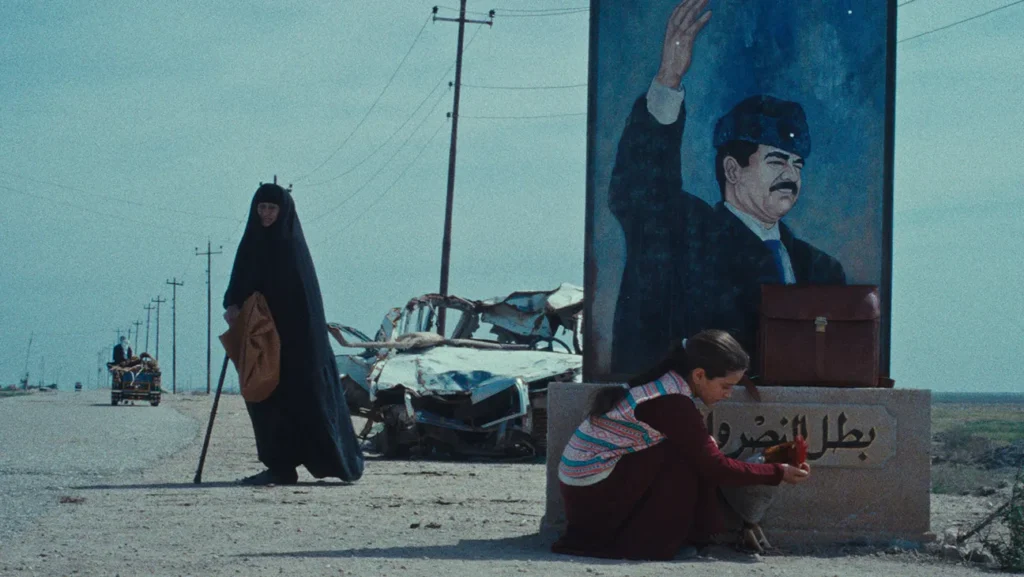
Hadi himself grew up in Iraq during the era depicted in the film, and his script was heavily inspired by his own childhood. This familiarity is tangible; there is a warmth to the film and an affection for its characters that comes from a personal place. While the movie deals with an incredibly dark period of history, Hadi isn’t merely making political statements. He is a storyteller first and foremost, and sometimes stories can be the most powerful tools for change.