
No Other Choice: Job-Hunting Can Be Murder
After the sublimely Hitchcockian Decision to Leave, South Korean master filmmaker Park Chan-wook returns to our screens with something a little more “Coen-esque.”
No Other Choice is one of Park’s most darkly comic films—a timely skewering of the corporate world. Based on The Ax by famed mystery novelist Donald E. Westlake, Park’s adaptation follows Man-Su (Lee Byung-hun), who finds himself unceremoniously let go from his job at a paper-making company. With his home—and his status as his family’s provider—now under threat, the desperate Man-Su dives into the ruthless world of job-hunting, only to discover that murder may be the only way to get ahead of the competition.

It’s a pulpy premise that shouldn’t be taken too seriously. Park is clearly having a ball with it, gleefully orchestrating Man-Su’s descent into violence with his tongue firmly in his cheek. Beneath its satirical façade, however, No Other Choice raises timely questions about how heartlessly corporations treat their workers. After all, if human beings are disposable to employers, why shouldn’t they be disposable to job-seekers?
Park Chan-wook has never really been one to do anything by halves—from the ultra-violence of Oldboy to the ultra-eroticism of The Handmaiden, he doesn’t shy away from excess. This, however, becomes something of a flaw in No Other Choice, which packs in so many tonal shifts, side characters, and narrative tangents that the overall film begins to feel muddled. The knotty plot can leave you wondering what’s actually happening and why the characters behave the way they do, distracting from Westlake’s high-concept hook.
In addition, the screenplay is padded out to over two hours. If only Park were as ruthless as his subject when it came to trimming it down, the final result could have felt far sharper. Sometimes, leaner is meaner.
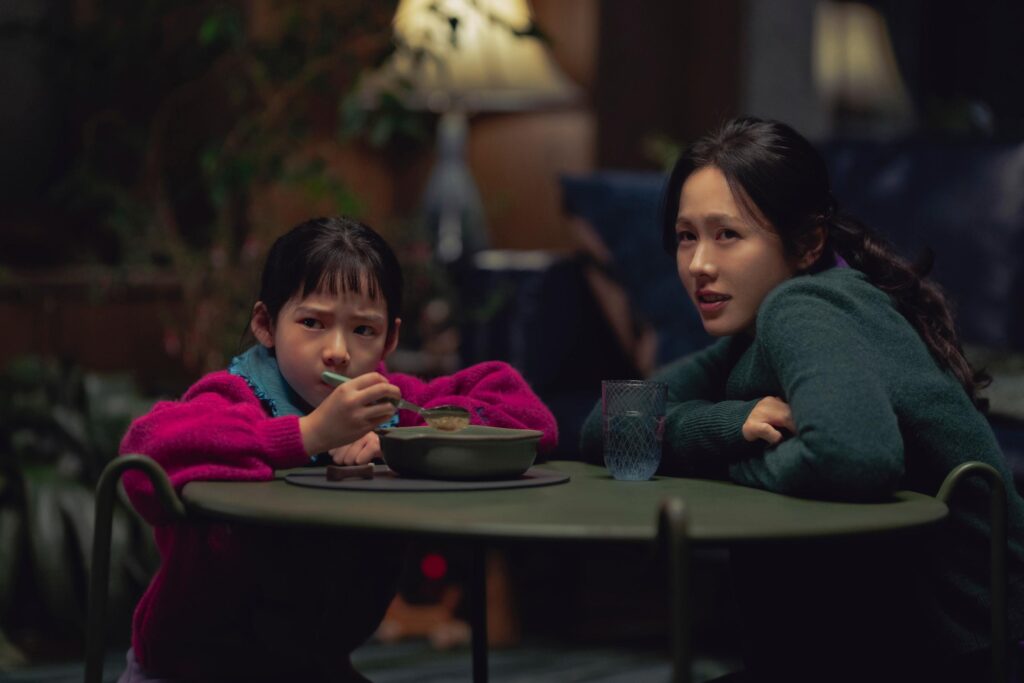
Park’s greatest masterstroke is the casting of Lee Byung-hun and Son Ye-jin as his wife, Lee.
The pair bounce perfectly off each other—his anxious catastrophising against her decisive pragmatism—adding more than a splash of Lady Macbeth to this cinematic cocktail. On a technical level, the craft is undeniable: Kim Woo-hyung’s elegant cinematography keeps the film richly drenched in shadow, while Jo Yeon-wook’s superbly anxiety-inducing score tips its hat to Bernard Herrmann, Hitchcock’s regular maestro.
For die-hard fans of Park Chan-wook, No Other Choice is a funhouse that will reward multiple visits. But despite the heaps of acclaim and awards his latest film has scooped up, an Oscar nomination for Best Foreign Language Film has once again eluded him. Surprisingly, Park has yet to receive a nomination for any of his films. Let’s hope he doesn’t take inspiration from his
own character to improve his chances next time… Joachim Trier, double-lock your door.