
BORDER by Matthew William Robnson by MC Grech
The opening night of Matthew William Robinson’s BORDER unfolded as an arresting meditation on division, rupture, and collective vulnerability. Presented at the Valletta Campus Theatre, the work reflects on the lines we draw between one another, probing questions of shared grief and imagined futures. Though modest in duration (approx. 30 minutes) the piece sustains a density of symbolism and physical intensity that far exceeds its temporal frame.
The stage opens in total darkness. A single white square flickers into visibility downstage centre, its intermittent glow cutting through a glitch-infused atmosphere. This stark visual immediately establishes a sense of fragmentation. When a body appears, curled and half-contained within the illuminated square, the image evokes a brilliance of both confinement and exposure. Pain emerges here as a central motif, not merely expressed but embedded within the physical vocabulary of the entire choreography. Each movement carries an undercurrent of violence: gestures are jagged, hyperextended, and frequently destabilised, as though the dancers are negotiating coherence with their bodies (and losing).
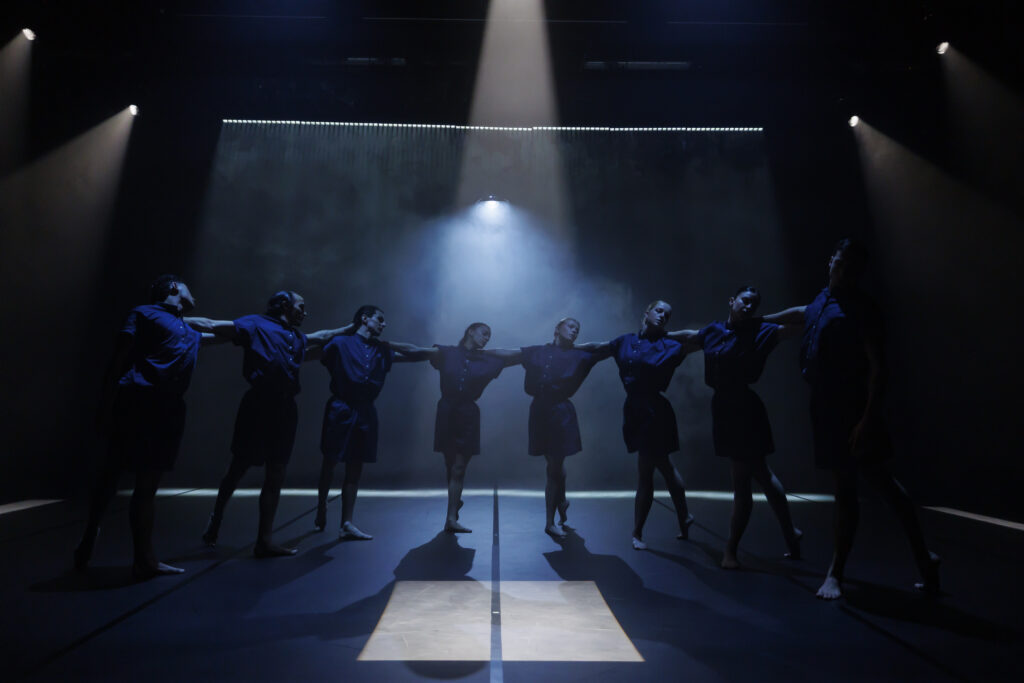
Robinson’s medium oscillates between unity and rupture. The ensemble at times coalesces into circles or lines suggestive of solidarity, only for these formations to splinter moments later. This persistent breaking apart generates a palpable tension that runs through the work. Even with eight dancers onstage, there is a sustained sense of asymmetry. The creative use of the theatre space intensifies this effect, with movement often driven toward the downstage corners, unsettling the audience’s visual expectations and reinforcing the fractured nature of the piece.
Midway through the performance, a particularly striking scene crystallises this tension. The dancers align facing upstage, stuttering their bodies to a rhythm inflicted under the static, while one figure alone faces the audience. There is a sudden screech of violins reminiscent of a horror film’s crescendo which coincides with the ensemble snapping their heads forward in unison. The moment is both theatrical and visceral, tightening the audience’s focus and heightening the atmosphere of collective unease.
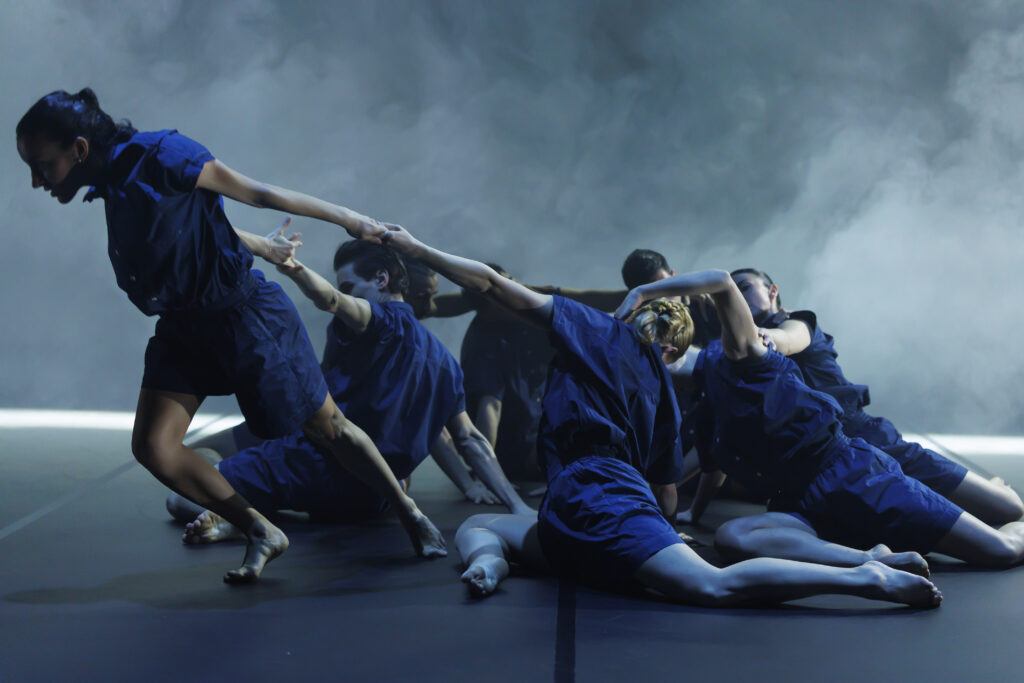
A single prop, a black flag, serves as the work’s most potent visual metaphor. First introduced at the beginning of the piece, it is dragged down the centre of the stage, threatening to bisect the body confined within the white square. The gesture evokes borders both literal and symbolic: divisions that wound as they define. In the closing sequence, this action returns with altered stakes. Rather than threatening an isolated figure, the flag now moves between a couple entwined in a duet that marries intimacy with aggression. The image suggests that anything in union always holds the violent possibility of rupture. In a further paradox, the flag also draws the ensemble forward together in its wake, forming what resembles a fragile human blade; perpetually fraying, yet momentarily whole.
The Haunting Brilliance of Paloma Muñoz’s Nácar by Margherita Borg Buhagiar
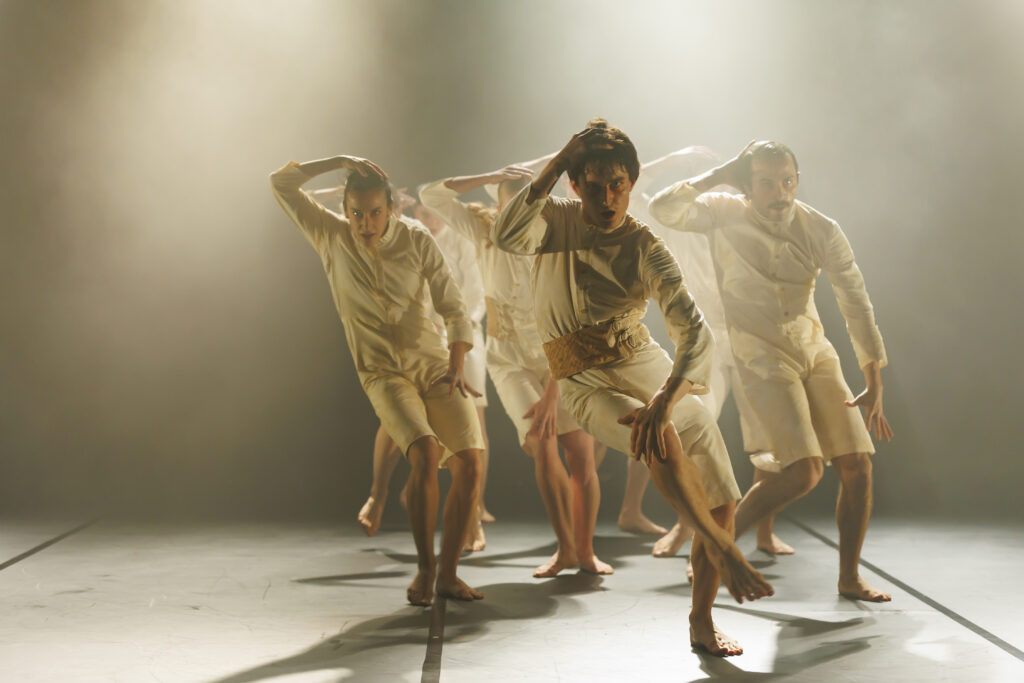
The second piece showcased during the first evening of Żfindays was Nácar, a contemporary creation by Spanish choreographer Paloma Muñoz. Marking her debut collaboration with Malta’s national dance company, the work explores the desire to “inhabit ghosts”—not merely as spectres of the dead, but as the lingering traces that persist within our bodies and call out from the invisible. The title, Spanish for “Mother of Pearl,” evokes the resilient, shimmering material formed layer by layer within a shell; it is a poignant metaphor for the hard-won beauty of experience and the naturalistic force projected by the choreography.
The piece begins in absolute darkness and silence. Gradually, a backlight reveals a solitary figure in white, wandering the space with an air of lost curiosity. As the figure draws closer to the audience, they hold our gaze and softly whisper the chilling traditional rhyme: “ara ġejja il-mewt għalik, biex taqlik, biex tixwik” (death is coming for you, to fry you, to grill you). It was a transfixing moment that pulled me to the edge of my seat, a position I found myself held in for the duration of the performance. This nod to a traditional locally played game was echoed by other dancers as they emerged onto the stage, adding an eerie, layered depth that resonated perfectly with the work’s haunting themes.
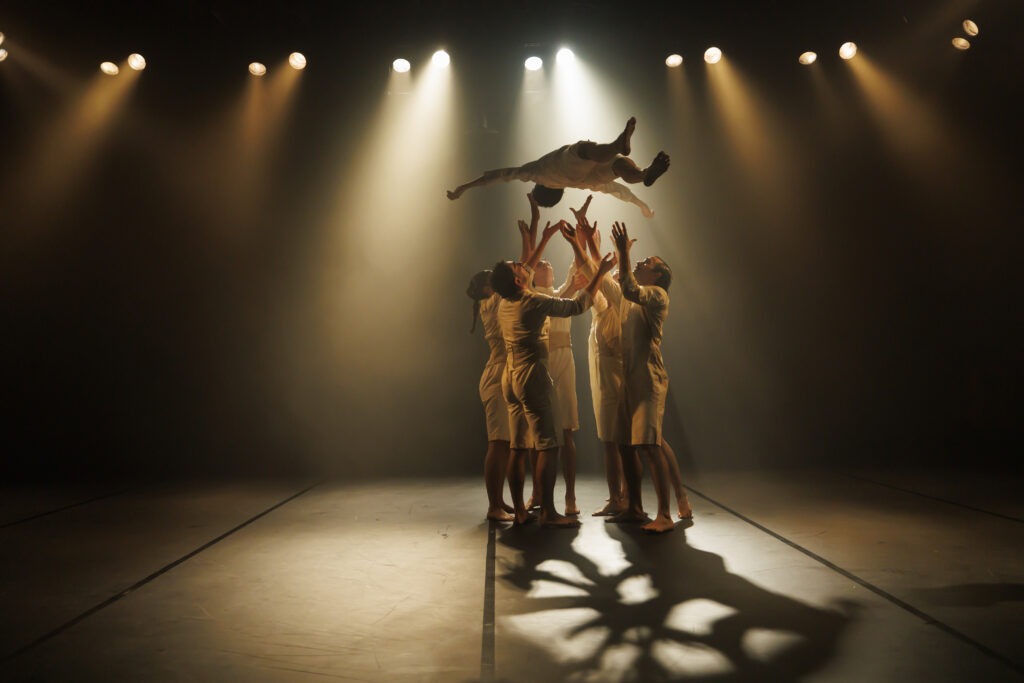
As the music intensified and the lighting brightened, the ensemble moved through a series of synchronised sequences punctuated by sudden, fleeting solos. The choreography ebbed and flowed between sharp staccato and fluid grace, mirrored expertly by Moritz Zavan Stoeckle’s lighting design. In an abrupt shift, the stage was bathed in a piercing pink downlight, triggering a cacophony of cackling laughter and screams. This section also continued to enhance Muñoz’s signature “razor sharp” movement language, where bodies struck one another in a ritualistic display that balanced delicate vulnerability with explosive power. A snap back to white light immersed the theatre in a meditative soundscape of what resembled wind instruments and organs. The musical score evolved into a rhythmic, heartbeat-like pulse, a cadence that the dancers mirrored as they stomped in perfect unison to the beat. As the tempo began to quicken, the physical momentum across the stage intensified accordingly; the performers swept across the space like a rising tide of waves, anticipating the onset of a great storm. Throughout this progression, the music, masterfully composed by Alejandro Da Rocha, builds in complexity, blending an electronic, almost rave-like atmosphere with the raw energy radiating from the dancers to send palpable vibrations throughout the theatre.
A particularly striking moment occurred when a body was hoisted, spun, and hurled through the air, serving as a powerful visual metaphor for the way memories and images endure within the physical frame, sometimes straining to break free from the body itself. These visceral vibrations, coupled with such commanding imagery, created the sensation of an electrical surge coursing through both the dancers and the stage itself. Transitioning from these pulsating movements to a collective, slow motion deceleration, the ensemble eventually faded into a backlight that reduced them to silhouettes before the stage plunged into black. This finale left the audience entirely breathless, finding themselves propelled into a spontaneous and richly deserved standing ovation.
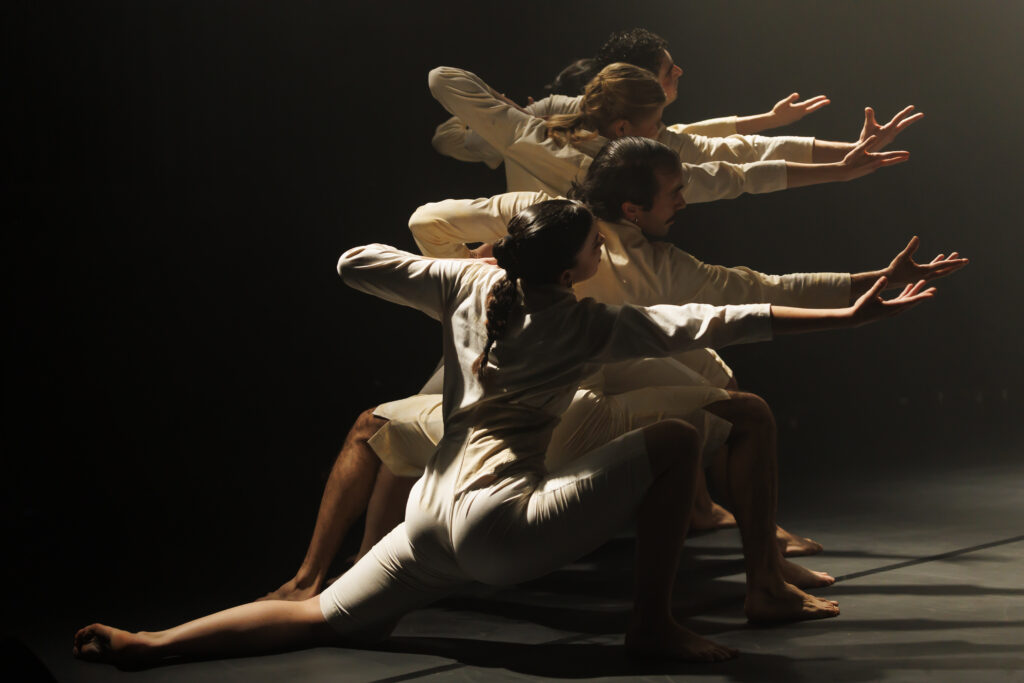
The entire evening left the audience in collective awe, moved by the sheer rawness evoked by both works and the profound vulnerability the dancers so masterfully portrayed. Between the deep-seated symbolism and the arresting imagery, the theatre was abuzz with conversation regarding the sheer power the performances held. Tonight we had the pleasure of witnessing a company at the very height of its powers, and I am truly excited to see what the rest of the season has in store.