
L-Istejjer Strambi ta’ Sara Sue Sammut: Remembering An Era I Never Lived
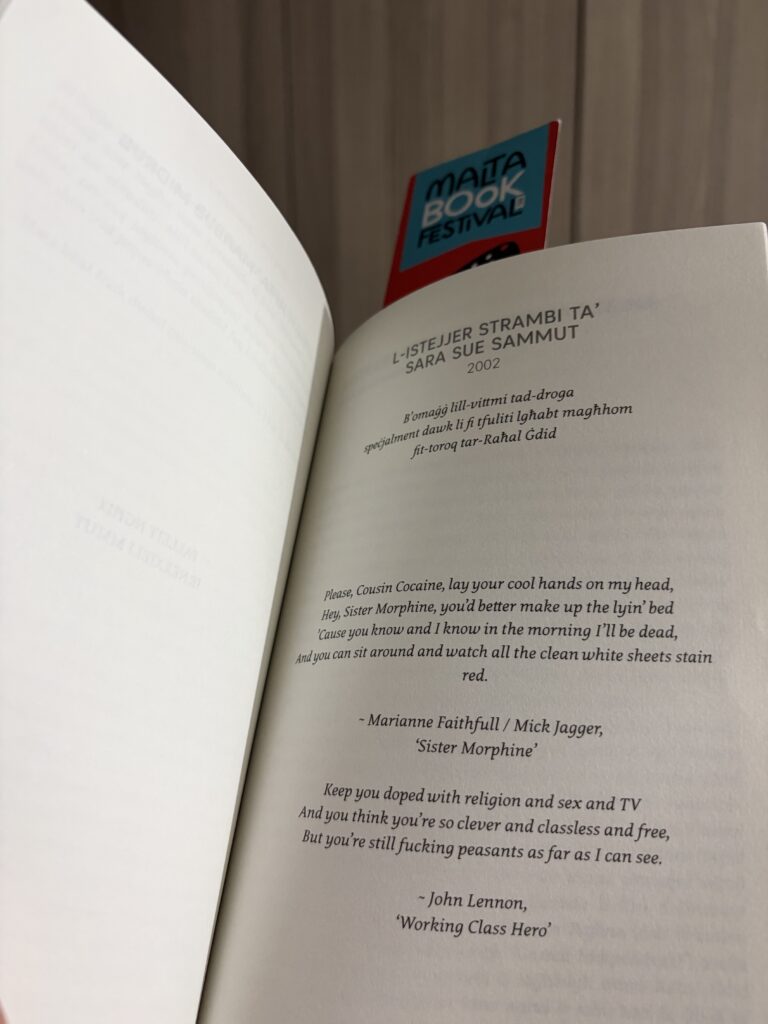
Stepping into Immanuel Mifsud’s L-Istejjer Strambi ta’ Sara Sue Sammut feels a little like opening a time capsule. The book was published over 20 years ago, roughly 2 years before I was born, yet it doesn’t read like an artefact from a different era. These stories have aged in fascinating ways. Some act as snapshots of a Malta that has quietly disappeared, while others strike a chord that possibly feel more relevant today than when they were first written. Mifsud’s real strength here is his versatility. He treats every story as a fresh experiment, refusing to force his characters into a single mould.
The collection opens with “Ultras,” which takes us into the tense, often violent world of football supporters. Mifsud frames football as a ritual, a high-stakes stage on which loyalty, aggression, and belonging are constantly rehearsed. He resists the temptation to sensationalise the darker aspects of this world, so the drinking, the tribalism, and the rough edges are simply considered part of this community’s everyday life. This makes the eventual violence feel terrifyingly inevitable, and the final, brutal scenes land all the harder because they grow so naturally out of the world he has carefully constructed.
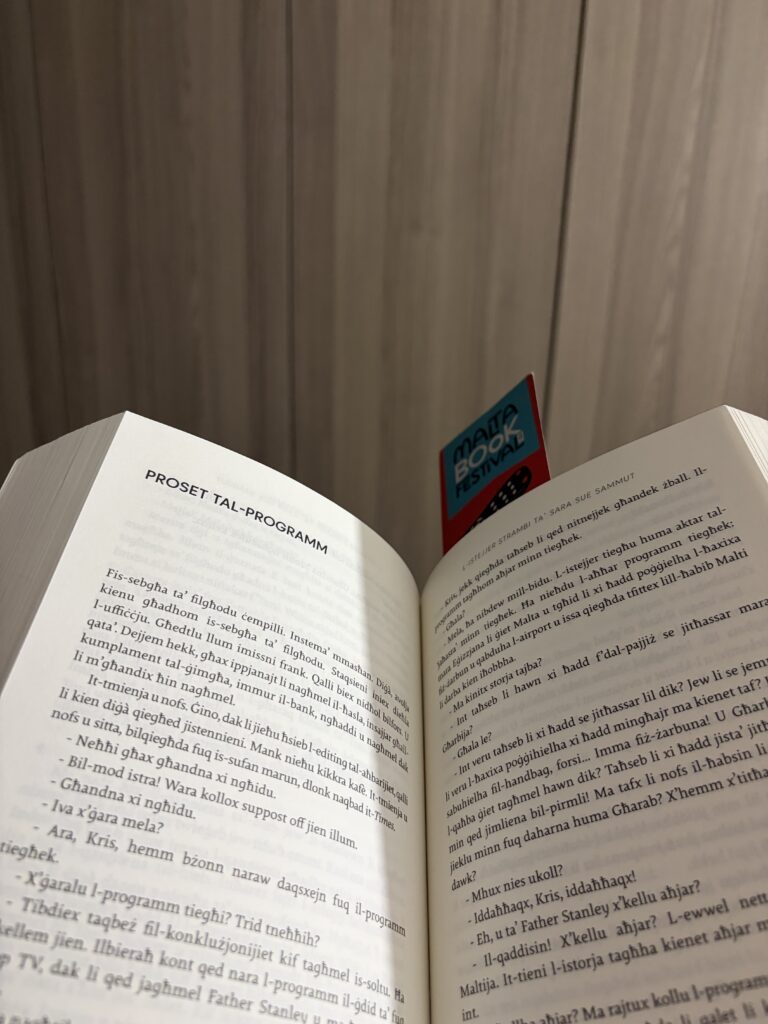
“Proset tal-programm” offers a satirical swipe at television production that, read today, feels eerily prophetic. Mifsud shows producers obsessively hunting for the most tragic stories they can find, having realised that ordinary suffering no longer counts as dramatic enough. Our habit of turning human emotion into entertainment did not begin with social media. It has been with us since the earliest days of local reality TV, and it’s as if Mifsud saw it coming.
Memory turns slippery in “Rubi.” A man spends decades chasing the ghost of a woman he has lost, and when she finally returns, transformed by a newfound religious devotion, the gap between his idealised memory and the real person standing before him is quietly devastating. His tragedy lies in his refusal to let go of a version of her that had likely ceased to exist years before her return.
“Kont ħsibt li l-fjuri kollha kienu mietu” dives into the chaotic early days of the internet. Mifsud captures the messy energy of old-school chatrooms, the spam, the bizarre usernames, the fragmented IRC conversations, and beneath all of it a lonely voice waiting for a reply. What first reads as digital noise gradually reveals itself as a deeply human account of isolation. Readers who missed that era will find here both a glimpse of an obsolete technology and a reminder of a rougher, more chaotic way of connecting online.
“Vjolini” is among the collection’s most touching pieces, whereby a man tries to bridge the divide between his past, when he travelled freely with his lover, and the rigid expectations of his conservative hometown. The recurring images of the river and the violin tie his past to his present with real grace. Tension of a different kind drives “Gżejjer,” particularly in its police interrogation scene, with the relentless questioning aimed at wearing Josette down until she breaks. The interrogation is built up through short, clipped dialogue drawn out across several pages, and it works impressively well. Reading it, I felt the way a pot must feel as it edges toward the boil, certain of overflowing but not yet sure when.
The title story, “L-istejjer strambi ta’ Sara Sue Sammut,” maps out a life through defining firsts: first love, first heartbreak, first political awakening, first pregnancy test, first doubts. As Sara Sue grows older, these milestones grow steadily more internal than external, and the story ends up distilling the collection’s central idea that life’s meaning accumulates slowly, in memory, in the quiet residue of ordinary days rather than in grand, cinematic moments.
“Mobile” acts as a companion piece to “Kont ħsibt li l-fjuri kollha kienu mietu,” though it approaches technology from another angle, satirising our dependence on mobile phones by placing them in situations where they plainly do not belong. Text messages interrupt moments that demand presence, exposing how easily a screen can pull us away from the people right in front of us. Read today, when smartphones have become something close to an extension of ourselves, the story feels like a warning we have been ignoring for years.
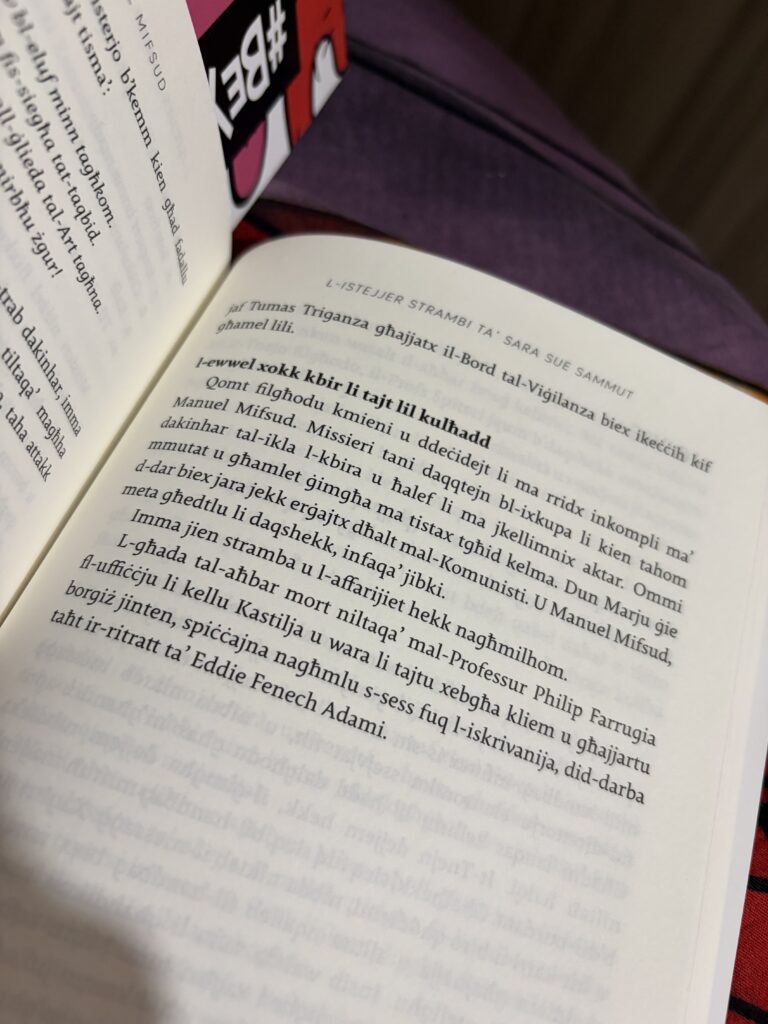
L-Istejjer Strambi ta’ Sara Sue Sammut remains a fine demonstration of what the short story can achieve. Every piece finds its own way into the messy business of being human. Here, Mifsud is tracing the universal ways we remember, reinvent, and misunderstand our own lives, and it is that tracing, story after story, that gives the collection its staying power.