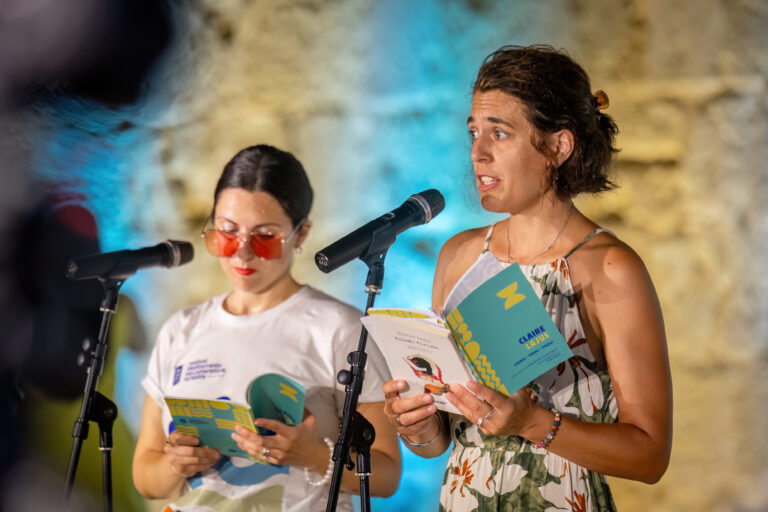

To mark the 80th anniversary of the end of the Second World War in Europe last year, Women and War: Flavours of Resilience brought together chefs, musicians, and performers at Château de Pourtalès in Strasbourg. Each discipline translated memory through a different medium: Malta’s leading female chefs (Letizia Vella, Francesca Farrugia, and Emily Micallef) through taste, the musicians (Carlo Muscat and Olena Poguliaieva) through melody, and the performers, (myself and Jeremy Grech (Il-Pirata), through embodiment. Together, we told Malta’s story, her wartime resilience, and gave voice to women who lived through it. This journal reflects on the process and my experience revisiting a character I had previously interpreted.
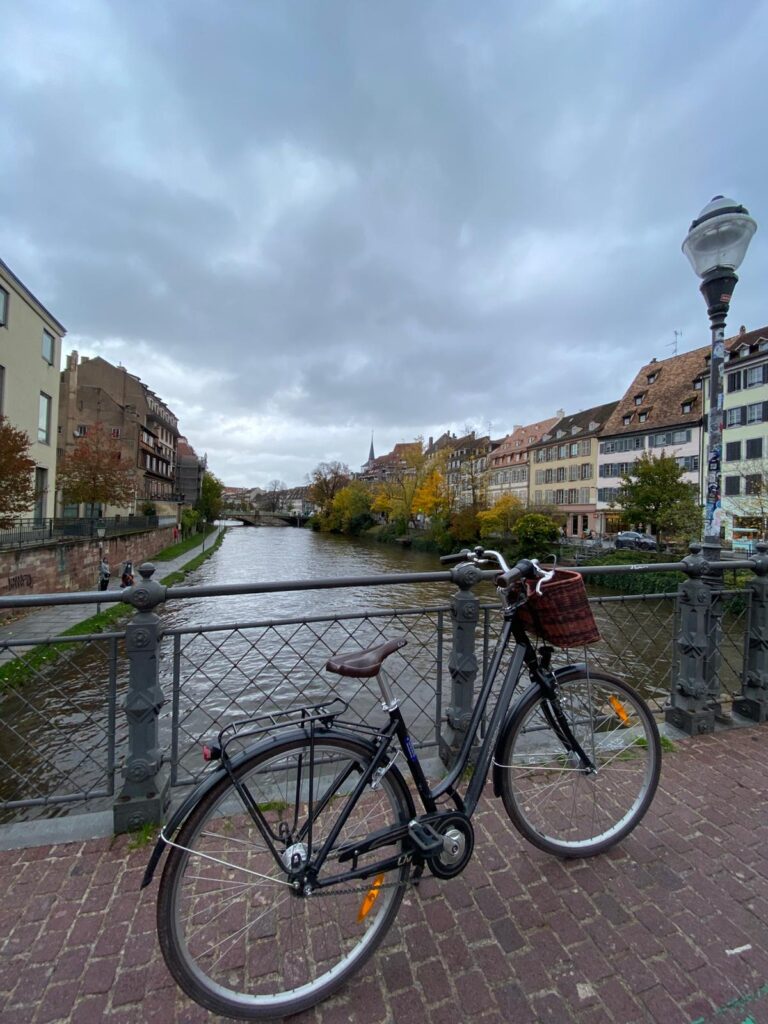
Strasbourg, the “Capital of Europe,” is a city I knew little about before researching its history. Learning about its symbolic role in Franco-German reconciliation and European politics deepened my appreciation for performing there. The setting added layers of meaning, reminding me that our work would not only interpret Malta’s past but invite reflection on Europe’s shared history.
I had been approached some time before regarding this project, though confirmation took a while. Funnily enough, on my calendar it’s still noted as “Strasbourg?” I kept the dates free, and once it was confirmed, I locked them in. Alongside Jeremy Grech, we held meetings to brainstorm and explore where we wanted this piece to go. There isn’t much material on women in war, but we gathered all the information available, and Jeremy began drafting the script. One thing was certain: we wanted to interpret real people.
May Agius
Her role? Personal secretary to Mabel Strickland at Allied Newspapers Limited, where she worked from 1941 until her retirement in 1968. She was one of 25 women journalists Miss Strickland hired during her leadership of the Newspapers. This wasn’t my first encounter with her. In 2022, I had portrayed her in the eight-part documentary series The Women of George Cross Island https://www.imdb.com/title/tt17973158/, as part of the wider ensemble of Maltese women in wartime. The series explores the lived experiences of women who kept the island’s heartbeat steady under relentless siege. In fact, to complement the dinners, guests and locals were invited to a daytime screening of the documentary at the Council of Europe – though, to our disappointment, attendance was very low.
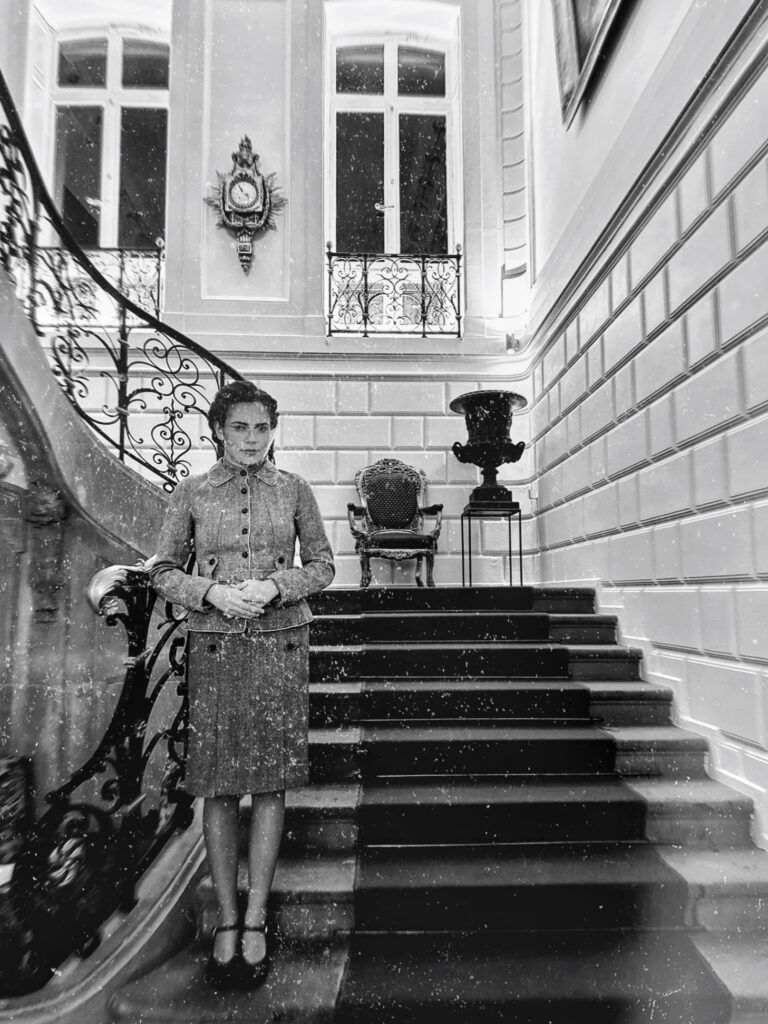
Returning to May Agius after three years in Women and War: Flavours of Resilience allowed me to approach her from a different vantage point. This time, I wasn’t merely reconstructing her from second-hand sources; I encountered her directly through her own handwriting and photography. A valuable collection of her work was donated to the National Archives in 2011 by members of her family. I discovered that photography was a hobby of hers. May captured a wide range of subjects; landscapes, landmarks, events, and day-to-day life, documenting a way of Maltese life now long gone. Surrounded by male photographers and photojournalists, “Camera-Girl” left her mark. You can explore her work here: http://memorja.com/Default.aspx.
I have nothing but praise for the staff of The National Archives of Malta. From the kindness on the phone when booking a slot, to their guidance in the reading room, I felt their immense respect for the material and their work. I was able to read May’s journals and log entries, an intimate encounter. Her writing: curved, steady, and profoundly human. Through it, I could feel her exhaustion, sense of duty, quiet optimism, and humanity. My understanding of her shifted from a historical figure to a once-living consciousness. It was no longer about “playing” May; it was about listening to her – to the silences between her words, to her fatigue, to the quiet conviction that held Malta together during chaos. After visiting the Archives, I revisited the script, tasked with making what was written sound like May. Performance is a responsibility, and in Strasbourg, working alongside Jeremy Grech (Il-Pirata), who is equally intent on preserving cultural memory, this responsibility felt profound.
There was something surreal about embodying a Maltese wartime figure within the walls of Château de Pourtalès. During the Second World War, the château was confiscated by Allied forces and used to house high-ranking officers – a stark reminder that these walls had witnessed both occupation and the complex machinery of war. We were not just telling Malta’s story to a European audience; we were inviting them into our collective past and prompting reflection on ongoing conflicts. A reminder that the human cost of war continues to reverberate across borders. As we presented the monologues alongside the next plate, inspired by Maltese Victory Kitchen dishes, I reminded the guests that they were fortunate to eat, moreover, from the hands of renowned chefs. The women volunteering in the Victory Kitchens weren’t always trained cooks, and food scarcity was a constant challenge.
This experience deepened my relationship with research-based performance. I have always been fascinated by how archives can breathe through performance. Standing in front of May’s handwriting, tracing her thoughts, and translating them into gesture and voice demanded honesty, humility, and restraint. If in 2022 I approached her as a character, this time I met her as a collaborator. Returning to May’s story after three years was a reminder that interpretation is never final. History continues to speak, but its tone changes depending on how we choose to listen.
In the end, my time in Strasbourg made me increasingly aware of the dualities threaded through the experience: between remembrance and the conflicts unfolding today, and the quieter tension of honouring hardship from within a space of privilege. We were invited, supported, and compensated to commemorate women who lived through scarcity and fear, and I couldn’t ignore the irony of that. This observation stayed with me, shaping a stronger responsibility toward the stories we carried, and those still yet to carry on.