
Last weekend, I attended Borma Tbaqbaq – Il-Lingwa tal-Kċina at Aġenzija Żgħażagħ in Santa Venera, an original work by Give or Take Productions, a production house creating original theatre with a purpose. Dedicated to women, those unknown, forgotten, or long silenced, the piece brings forward narratives shaped by domestic violence, toxic relationships, and the weight of patriarchal systems. Written and produced by Valerie Buhagiar, Angele Galea and Pauline Fenech, and directed by Tyrone Grima, the play unfolds as a powerful reflection on identity, inherited silence, and the domestic spaces that have defined generations of Maltese women. This original, bilingual work will be performed again at Aġenzija Żgħażagħ, Santa Venera from the 5th until the 7th December 2025.
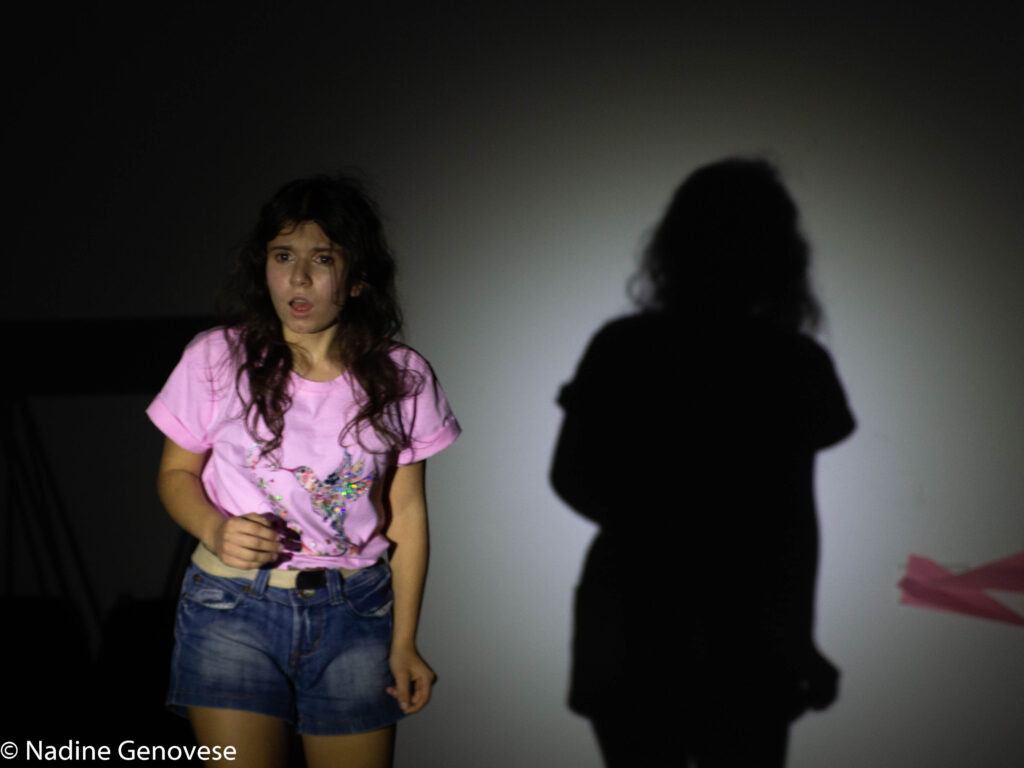
The play begins with Maltese-Canadian lawyer Josie (Valerie Buhagiar) returning to Malta to defend a man accused of murdering a young girl (Leah Grech), while also attending the funeral of her favourite aunt. As the story unfolds, we witness her complex relationships with her mother and other family members, revealing layers of family tension and unspoken stories. Josie herself embodies the concept of “borma tbaqbaq”, carrying anger and unresolved trauma she is initially unaware of, which gradually comes to light throughout the performance. This personal journey is interwoven with the presence of the Goddess of Fertility (Pauline Fenech), who provides a running commentary on the island’s history and current affairs. Set against Malta’s prideful yet turbulent landscape, the play captures the tension between appearance and reality. Through this blend of personal and collective histories, Borma Tbaqbaq explores how inherited silence, societal facades, and unacknowledged anger shape both individual identity and the wider community.
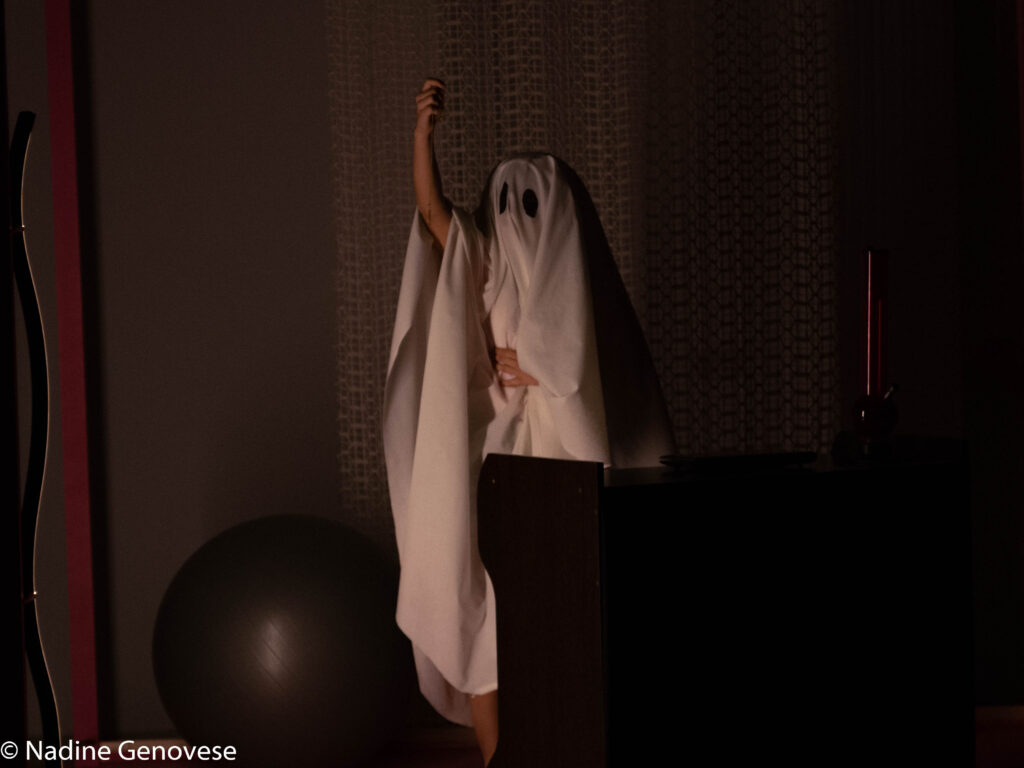
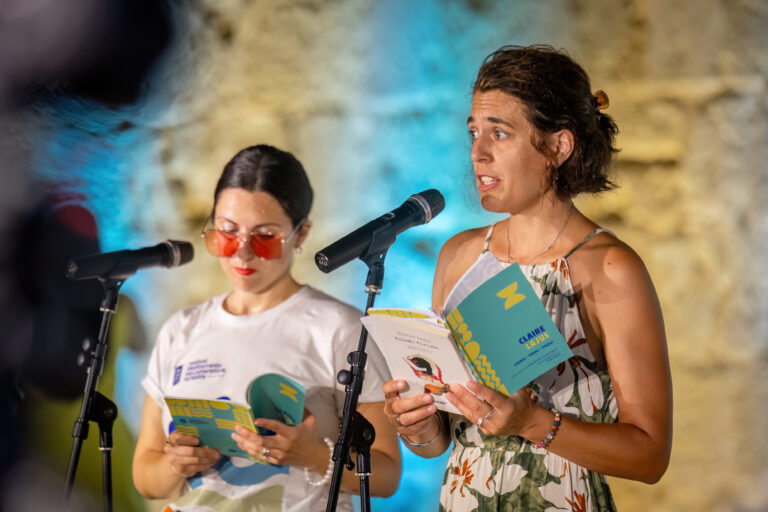
Valerie Buhagiar (Josie), Angele Galea (Fallen Statue/Nun/Mother), Pauline Fenech (Goddess of Fertility), and Leah Grech (Ghost/Young Girl) were visibly passionate and deeply invested in the material. Yet, I was left with many questions: at times, the performance felt so intimately tied to its creators that I wondered whether stepping back might have allowed the work to breathe, or for the piece to move in other directions.
Buhagiar, Galea, and Fenech wrote and produced the play, but Galea additionally took on project management, composed the original music, and handled set design and props. While competent, these elements occasionally felt underdeveloped, raising questions about the choices behind them. Did the simplicity reflect budget limitations, or the closeness of the creators to their own work? The set, props, the movement of the audience between rooms, and the general use of space at times had a sense of “just because,” leaving certain moments feeling either flat or excessive.
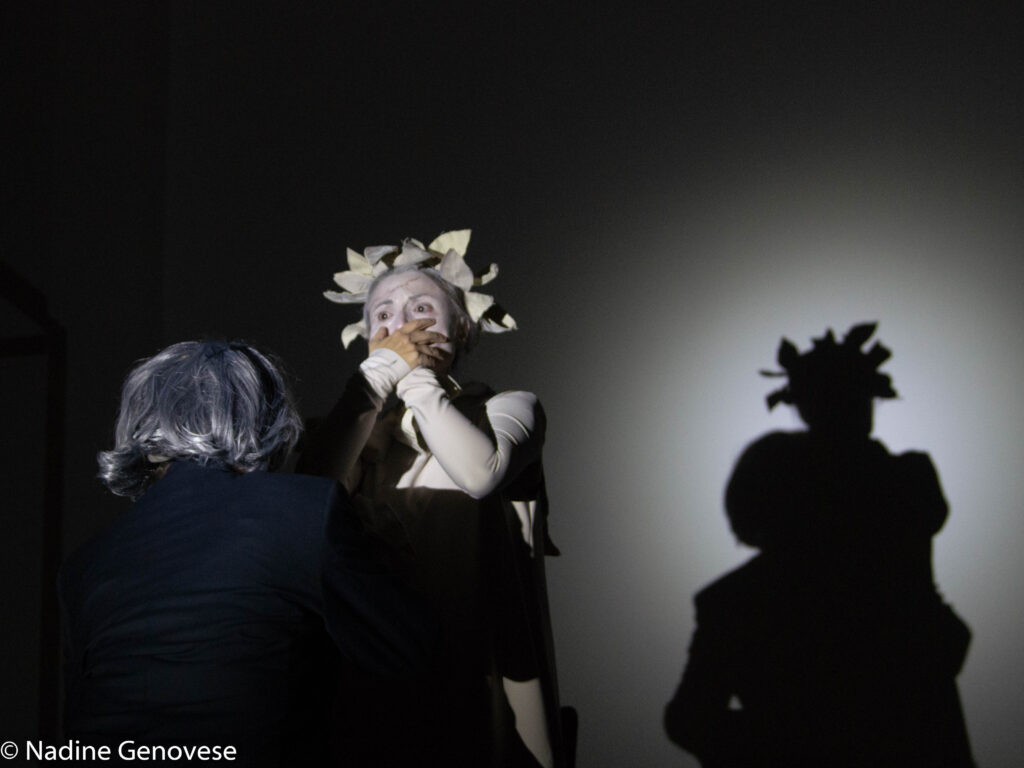
Another notable aspect is the decision to have the play directed by Tyrone Grima, despite its strong focus on women’s lived experiences. While not inherently a flaw, it prompts reflection on whether a male directorial gaze can fully interpret a narrative about historical silencing. The male presence on stage on the other hand was primarily conveyed through voices. Bruce Spinney (Josie’s boss), Justin Darmanin (Josie’s brother), and Paul Portelli (the accused man), physically embodied only by Josie herself. I found this choice interesting, reinforcing the play’s emphasis on women’s embodied experience, men as shadows or external forces within the story.
The set featured a wooden frame, with one side as Josie’s room in Canada and the other as the convent room in Malta. The middle space transformed into locations like the interview room, the square with the fallen statue, and the aunt’s funeral. This central area seemed intended as a symbolic midpoint. The production design created moments of visual and sensory interest, but some choices felt excessive or unnecessary such as the constant movement of the Goddess of Fertility or the 10-minute pastizz break in the kitchen. While the break allowed time to adjust minimal set changes, it risked distracting from the narrative rather than enhancing it. Similarly, certain added embellishments occasionally felt more performative than purposeful.
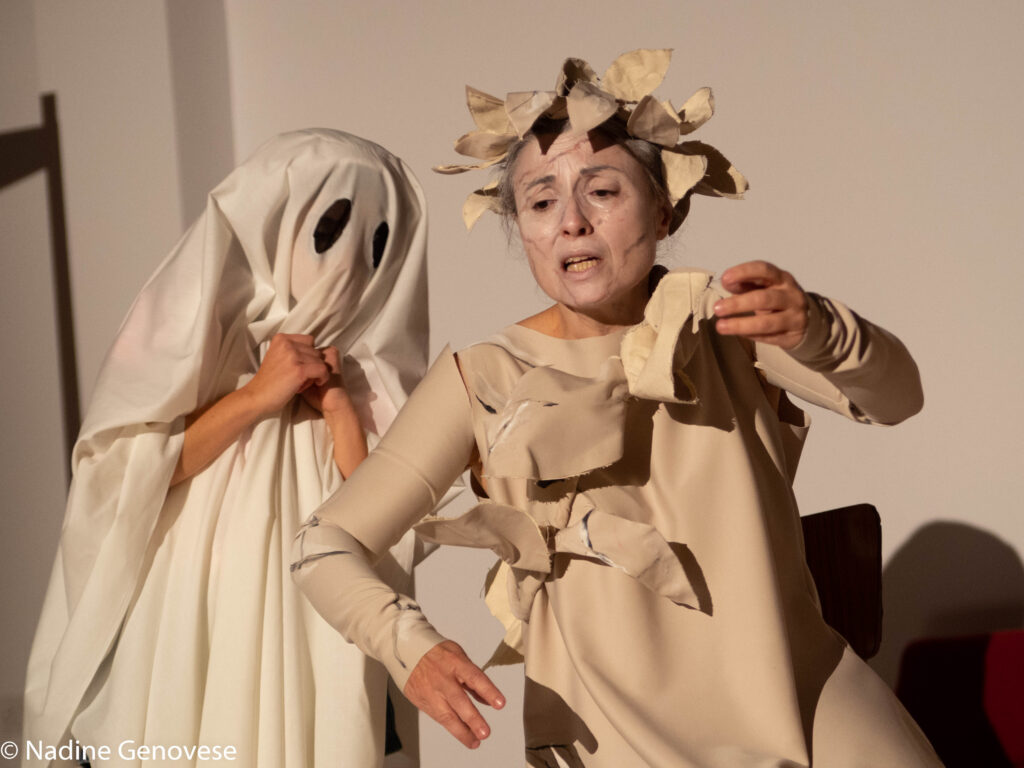
The production was advertised as lasting one hour, though the performance ran closer to ninety minutes, a notable discrepancy for anyone planning their evening. Some marketing choices were puzzling, though they made more sense after seeing the piece. The age rating of 5+, however, feels questionable given the strong themes and language used. While the ticket price is fairly standard, the description on Shows Happening struck me as overly pompous and possibly AI-generated. It comes across as grandiose and “extra,” which could leave potential audience members puzzled or slightly disconnected before even booking or going to the theatre.
Borma Tbaqbaq – Il-Lingwa tal-Kċina is a purpose-driven work, and when approached on those terms, it succeeds. It is bold, emotionally charged, and unapologetically Maltese. The performers’ passion undeniably carried the piece, yet the accumulation of questions about the set, props, multiple creative roles, and directorial choices lingered long after the performance ended. One is left wondering: why were these decisions made, and how might alternative approaches have transformed the experience? While some choices felt confusing and certain elements of execution amateur, the production’s heart is unmistakable, giving voice to stories that have long remained silenced.