
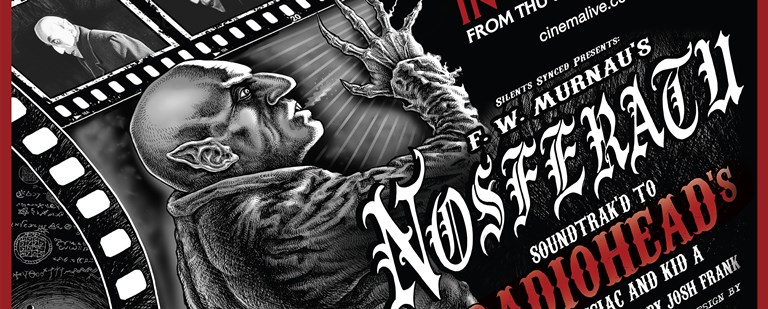
The idea of dubbing over silent movies with contemporary rock albums is an intriguing one, especially when Silents Synced first victims happen to be none other than Nosferatu and Radiohead’s Kid A and Amnesiac. Unfortunately for all parties involved however, if you try combining two really great things without any real clarity of vision, the resulting mess is, well, a mess.
As a fan of both the horror classic and Radiohead, I was skeptical before I’d even stepped into Spazju Kreattiv’s cinema. My suspicions about it not being good were correct, but the why is slightly more complicated to explain. It didn’t ‘ruin’ either film or album(s), and you could still appreciate both in this project. In part this is because both Nosferatu and Radiohead are all about impurity, both thematically and practically. Nosferatu, at its core, is a story of plague, insanity, dirt and rats. As any horror nerd will tell you, probably in a very condescending, but nonetheless truthful tone, for all the well-deserved praise Nosferatu gets in terms of nuance and originality, it was famously sued by the Bram Stoker estate and consequently had almost all its copies destroyed for being an unauthorized adaptation of Bram Stoker’s Dracula (which itself by the way, cannot be said to be completely originary because ‘the vampire’ was already a rising literary trope at the time). As a final note on this, there is no way you can watch Nosferatu today without being reminded of every piece of vampire lore you’ve seen before, in film or otherwise. Sure Nosferatu probably came before every single one of those, but culturally, the rip-off has been itself ripped off, mutilated, and sewn back to other things so many times it’s impossible to see it as a singular piece. One could say that in all aspects, you’d be hard-pressed to find another watching experience that’s as purely impure as Nosferatu in the 21st century. In a parallel manner, part of what makes Radiohead great is because other than ‘alternative/experimental rock’, no title fits the way the band uses and remixes elements from other genres and eras with ease. However -and this is essential- the reason both ventures successfully utilise the freedom that impurity allows for is through powerful artistic vision and mastery of craft. Radiohead x Nosferatu, it’s safe to say, was missing that most crucial, obvious, piece of the puzzle.
There is not a lot that thematically connects the Radiohead albums to the horror classic, although to be fair, not much that thematically disconnects them either. Some scenes worked surprisingly well. For example, the scene in which Hutter walks alone through the Transylvanian mountains before encountering the coachman is accompanied, ironically, by the track titled You and Whose Army, and even had horses in the shot in time with the lyric ‘Ghost horses’, although that latter detail seemed like just a happy accident. The ending scene also worked well with Motion Picture Soundtrack, the crescendo of the song starting right when Ellen drops dead (spoiler alert?! This film is over a century old!). I should also mention that besides the addition of contemporary music, the people behind Nosferatu x Radiohead decided to add a few laser effects around certain props and characters in the original. Again, besides being kind of interesting, and occasionally pulsating on time with the music, these don’t really seem to have a specific purpose.
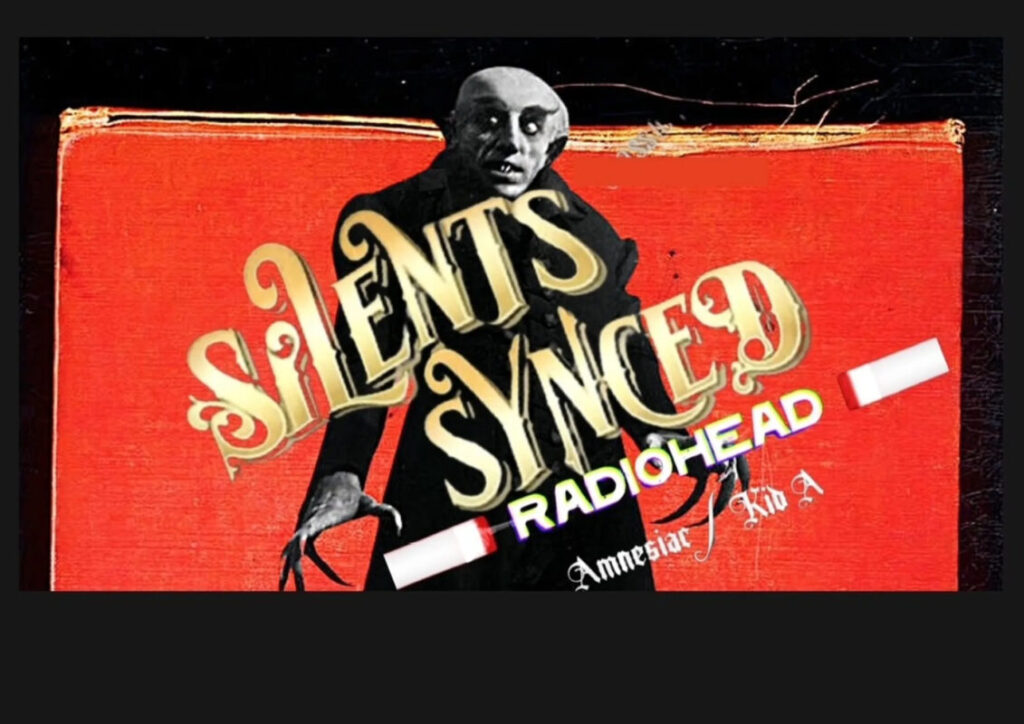
Before the actual film started, the audience was greeted with a message by one of the people behind Silents Synced itself – one Josh Frank. In the video, Frank explains briefly that Silents Synced was born out of a love for both rock concerts and avant-garde cinema experiences, and how the possibility of the latter has all but disappeared.
It’s clear, even from skimming Silents Synced’s Facebook page, that the people behind it are by all means well-intentioned. Yet in an ending almost as tragic as Nosferatu’s own, love of the game doesn’t automatically translate into ability to play.