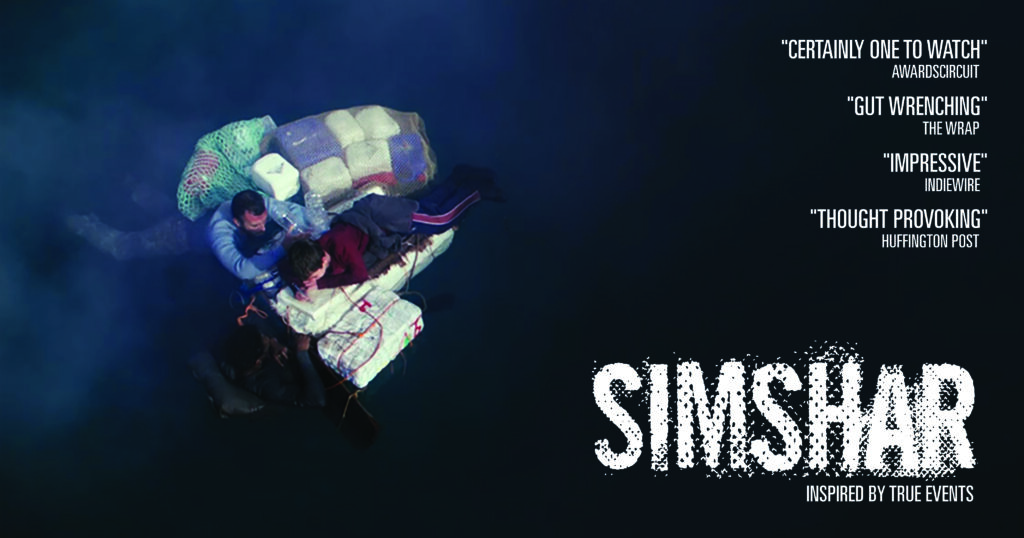

Simshar: falling short of the powerful, nuanced story it aims to tell
By MC Grech
The dramatisation of real-life tragedies in film and other forms of media is a heavily contested topic. Before even discussing a film like Rebecca Cremona’s Simshar, it is important to mention that the morality behind such representations, beyond the actual ‘quality’ of the film itself, is a very important, historically weighted issue that extends far beyond the purposes of this review. Having said that, the ethical question becomes slightly more complex, and perhaps, unanswerable, when a film is this mediocre.
Most of Simshar is clearly an attempt at a story that is based on real events, but one that ultimately has its own, separate aims beyond representation. As such, this is the part of the film that the review will be focusing on, though it is worth mentioning the more documentarial aspects. The main issue I had with this film is that it seems to genuinely believe it can tell a story with a beginning and end while also representing a very real tragedy in raw, horrific realism. I cannot think of a single example where this has been done with any real success, or at least without it dredging up a myriad of ethical issues (Schindler’s List, Boy in the Striped Pyjamas, etc..) ,and ultimately, the impossibility of doing that is arguably a good thing. As such, the more documentary-styled scenes, namely depicting the actual deaths in the Simshar tragedy, are not scenes I will be referring to in this review.
The film’s second storyline focuses on Alex, a Maltese medic ensnared in a bureaucratic dispute between Malta and Italy over who should accept a group of African migrants stranded aboard a Turkish merchant ship while their fate is decided for them. Visually, the film is quite strong. A few of the actors, namely Sékouba Doucouré as Moussa, Clare Agius as Sharin, and Lotfi Abdelli as Simon (all characters from the Simshar plotline) are convincingly cast in their roles. That’s pretty much where the strengths of the film end. The rest of the acting is quite dull, as is much of the writing. The dialogue often doesn’t even work as dialogue; it feels as though the characters already know what the other is going to say, so no real exchange of information takes place.
Alex’s character arc both comes out of nowhere and is entirely predictable. He transforms from an angry, xenophobic doctor into a vaguely redeemed figure who no longer hates the job he signed up for. Anti-immigrant protestors appear at the immigrant asylums in Malta twice: first, when Alex ignores them, seemingly in agreement, and later when he suddenly yells at them to leave, now framed as a kind of moral hero. Ultimately, the character is a very flat, textbook “white saviour” character. Even though the film is clearly well-intentioned in its attempts to make the audience sympathise with the migrant characters, the focus ultimately remains on the struggles of the Maltese protagonists. Once again, this feels like the result of a creative and production team trying to do too many things at once and take on too many themes without fully developing any of them.
Another aspect of the film that made it off-putting was how blatantly it pandered to a non-Maltese audience. The strangest and funniest example of this is a brief Maltese television news report delivered in English so unnatural that it made me think someone behind the camera was pointing a gun at Keith Demicoli. In fact, there were times I felt that the reason some of the Maltese dialogue sounded so stilted was because it had been written with an eye toward how it would later be translated into English subtitles, but that’s just speculation from my end.
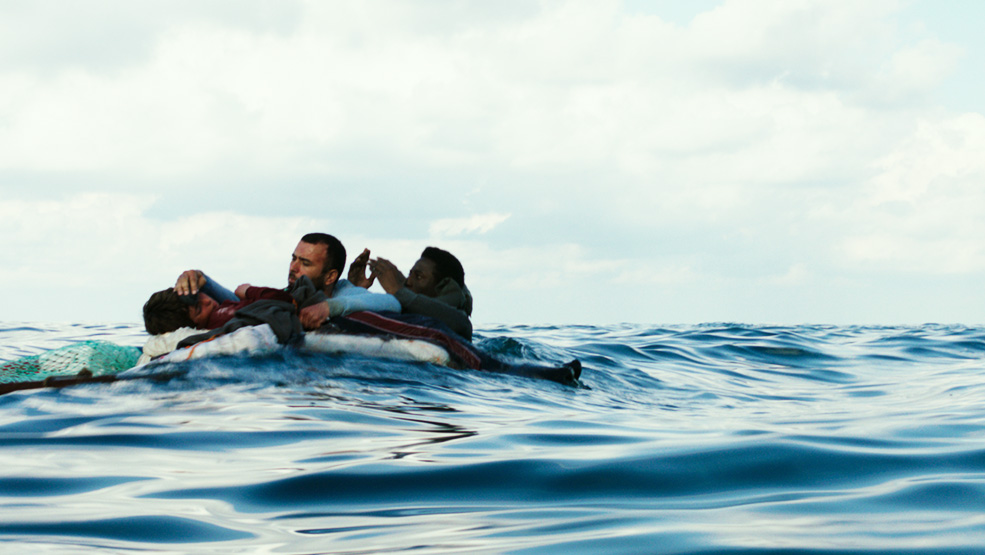
In general, the ‘Malta’ of this film, from the children playing football in the church piazza to Sharin’s character breaking the neck of a domesticated pigeon for dinner, feels like an exaggerated attempt to showcase “traditional Maltese-ness” rather than a sincere portrayal of a typical (out-dated) Maltese family. On paper, the themes Simshar explores are certainly interesting: the fishing quota debacle, in which Simon is pushed to break the law to make a living; and the ease with which asylum seekers are reduced to political pawns. These are issues worth exploring. Yet, once again, the film’s aspirations outweigh its achievements. From the two-dimensional, stereotypical characters to the abrupt shifts in tone and focus, the film’s intentions are clear, but its execution leaves much to be desired, ultimately falling short of the powerful, nuanced story it aims to tell.